
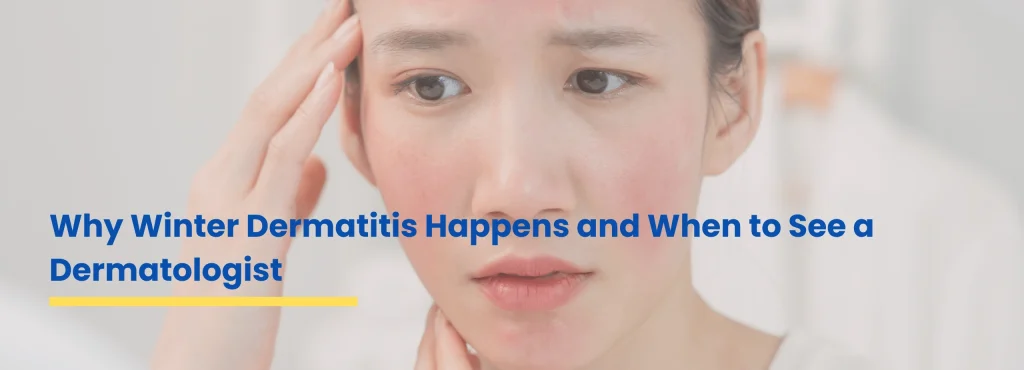
Every winter, many people around us start complaining about similar skin problems — itching that won’t stop, dry patches that crack, redness on hands and legs, or skin that suddenly feels uncomfortable no matter how much lotion is applied. What most people don’t realize is that this is not just “normal winter dryness.”
In many cases, it is actually Winter Dermatitis. Winter Dermatitis is a common cold-weather skin condition that worsens when temperatures drop and humidity levels fall. If ignored, Winter Dermatitis can become painful, recurrent, and difficult to manage without medical help.
Understanding why winter affects our skin so severely and knowing when to consult a dermatologist can help prevent long-term skin damage and discomfort.
What Is Winter Dermatitis?
Winter dermatitis is a type of skin inflammation that commonly appears during cold months. It occurs when the skin loses its natural moisture barrier due to environmental and lifestyle factors common in winter.
Unlike simple dry skin, winter dermatitis often includes itching, redness, irritation, scaling, and even cracks that may bleed. These symptoms can interfere with daily life and worsen if left untreated.
How Winter Dermatitis Differs From Normal Dry Skin
Dry skin is very common during winter and usually improves with simple care such as applying a moisturizer once or twice a day. In most cases, dry skin feels tight or rough but does not cause severe discomfort. Once the skin is properly hydrated and protected from cold air, the dryness gradually settles down.
Winter dermatitis, however, is more than just dry skin. It occurs when the skin’s protective barrier is significantly damaged due to cold weather, low humidity, frequent hot showers, and excessive use of heaters. Because the skin barrier is compromised, moisture escapes rapidly, and irritants easily penetrate the skin. This leads to persistent inflammation, not just dryness.
People with winter dermatitis often experience:
Intense itching that does not improve with regular moisturizers
Red, inflamed, or swollen patches
Scaling or peeling of the skin
Painful cracks, especially on hands, feet, and legs
Burning or stinging sensations
Unlike simple dry skin, winter dermatitis does not respond well to basic skincare routines. Even after using over-the-counter creams, symptoms may continue or worsen. Scratching due to itching can further damage the skin, increasing the risk of infection and delayed healing.
This is where medical care becomes important. A dermatologist can identify whether the condition is winter dermatitis, eczema, or another inflammatory skin disorder. Based on the severity, a dermatologist may prescribe medicated creams, barrier-repair moisturizers, or anti-inflammatory treatments to restore skin health.
Why Winter Dermatitis Happens
Cold Weather and Low Humidity Effects on Skin
Cold air holds less moisture. As humidity drops, moisture evaporates from the skin faster, leading to dryness and inflammation.
Hot Water Baths and Skin Barrier Damage
Long hot showers may feel comforting in winter, but they strip the skin of natural oils, weakening the skin barrier and triggering dermatitis.
Overuse of Heaters and Indoor Dry Air
Room heaters further reduce indoor humidity, making the skin dry and itchy, especially on exposed areas like hands, face, and legs.
Lack of Moisturization in Winter Months
Many people underestimate the need for frequent moisturizing in winter, leading to worsening dryness and irritation.
Recognizing the Early and Advanced Signs of Winter Dermatitis
Winter dermatitis does not appear suddenly in a severe form. In most cases, the condition develops gradually, starting with mild discomfort and progressing if the skin is not properly cared for. Many people ignore the early signs, assuming they are a normal part of winter, which allows the condition to worsen over time.
Early Warning Signs to Watch For
In the initial stage, winter dermatitis may present as:
Mild itching that increases after bathing
Tight or stretched feeling of the skin
Slight redness, especially on exposed areas
Rough or uneven skin texture
These symptoms often appear on the hands, arms, legs, and face, where the skin is most exposed to cold air.
Severe Symptoms That Need Medical Attention
In advanced winter dermatitis, the skin may show:
Deep cracks or fissures, sometimes with bleeding
Thickened skin due to repeated scratching
Burning or painful sensations
Increased risk of bacterial or fungal skin infections
These severe symptoms indicate that the skin’s natural defense has been significantly compromised. Consulting a dermatologist in Roorkee at this stage is essential to prevent complications and long-term skin damage.
Commonly Affected Body Areas
Winter dermatitis most commonly affects:
Hands and fingers due to frequent washing
Lower legs, especially the shins
Elbows and knees
Face and lips in cold winds
Why Early Recognition Matters
Identifying symptoms early allows timely intervention. A skin specialist in Roorkee can help determine the severity of the condition and recommend appropriate treatment before the symptoms progress further.
Winter Dermatitis vs Eczema – Know the Difference
Many people use the terms winter dermatitis and eczema interchangeably, especially when skin problems worsen during cold weather. While both conditions may look similar on the surface, they are not the same, and understanding the difference is important for proper treatment.
Key Differences Between Winter Dermatitis and Eczema
| Feature | Winter Dermatitis | Eczema |
|---|---|---|
| Cause | Cold weather, low humidity | Genetic and immune factors |
| Duration | Seasonal and temporary | Chronic and recurring |
| Onset | Starts in winter | Can start anytime |
| Severity | Mild to moderate | Can range from mild to severe |
| Treatment | Moisturizers, short-term medication | Long-term medical management |
Can Winter Dermatitis Turn Into Eczema?
Winter dermatitis does not directly turn into eczema. However, in people who already have eczema or sensitive skin, winter conditions can trigger eczema flare-ups. In such cases, what seems like winter dermatitis may actually be underlying eczema aggravated by cold weather.
This is why correct diagnosis is important.
Why Proper Diagnosis Matters
Treating eczema like simple winter dryness can lead to:
Persistent itching
Repeated flare-ups
Skin thickening
Higher risk of infections
A dermatologist can distinguish between these conditions based on medical history, symptom patterns, and skin examination.
When to Consult a Dermatologist
You should consult a dermatologist in Roorkee or a skin specialist in Roorkee if:
Skin problems return every winter without improvement
Symptoms persist despite regular moisturization
There is severe itching, redness, or cracked skin
Skin lesions spread or worsen
Early consultation helps prevent complications and ensures the right treatment approach.
Who Is More Prone to Winter Dermatitis?
Certain individuals are more vulnerable to winter dermatitis:
People With Naturally Dry or Sensitive Skin
Their skin barrier is weaker and loses moisture faster.
Children and Elderly
Children have immature skin barriers, while elderly skin produces less natural oil.
People With Skin Allergies or Existing Conditions
Those with eczema, psoriasis, or allergies are more likely to experience winter flare-ups.
Home Care Tips to Manage Winter Dermatitis
While mild cases can be managed at home, consistency is key.
Moisturizing Routine
- Apply moisturizer immediately after bathing
- Use thick, fragrance-free creams or ointments
- Moisturize at least 2–3 times daily
Choose Gentle Cleansers
Avoid harsh soaps. Use mild, soap-free cleansers to protect the skin barrier.
Clothing Choices
Wear soft cotton fabrics. Avoid wool directly on skin as it can worsen irritation.
Hydration and Diet
Drink enough water and include healthy fats like nuts, seeds, and fish in your diet.
Consulting a Dermatologist in Roorkee for Winter Skin Problems
If you live in or around Roorkee, consulting an experienced dermatologist in Roorkee can make a significant difference in managing winter skin issues.
Why Early Diagnosis Matters
A skin specialist in Roorkee can identify whether your symptoms are simple winter dermatitis, eczema, or another condition and start appropriate treatment early.
Expert Care for Winter Dermatitis
Professional guidance helps prevent complications, scarring, and long-term skin damage caused by untreated inflammation.
Frequently Asked Questions About Winter Dermatitis
Is Winter Dermatitis Contagious?
No, winter dermatitis is not contagious.
Can Winter Dermatitis Heal Completely?
Yes, with proper care and treatment, symptoms can be controlled effectively.
How Long Does Winter Dermatitis Last?
It usually improves with weather change, but proper treatment speeds up recovery.
Conclusion
Winter dermatitis is more than just seasonal dryness. Ignoring the symptoms can lead to chronic skin problems and repeated discomfort every year. Understanding the causes, adopting proper skincare habits, and knowing when to seek help are crucial steps in protecting your skin.
If your symptoms persist or worsen, consulting a qualified dermatologist in Roorkee or a trusted skin specialist in Roorkee can help you regain healthy, comfortable skin even during the harsh winter months.
ACE Clinic
Address: Aim fitness gym, Ace clinic, Dehradun Rd, near Vinay Vishal hospital, Nehru Nagar, Roorkee, Uttarakhand 247667
Phone No: +91-9548732883
Email: [email protected]
Timings: 10:00 AM TO 09:00 PM
Google Map Location Listing: https://maps.app.goo.gl/xC7d3epyAZRNRtRw5