
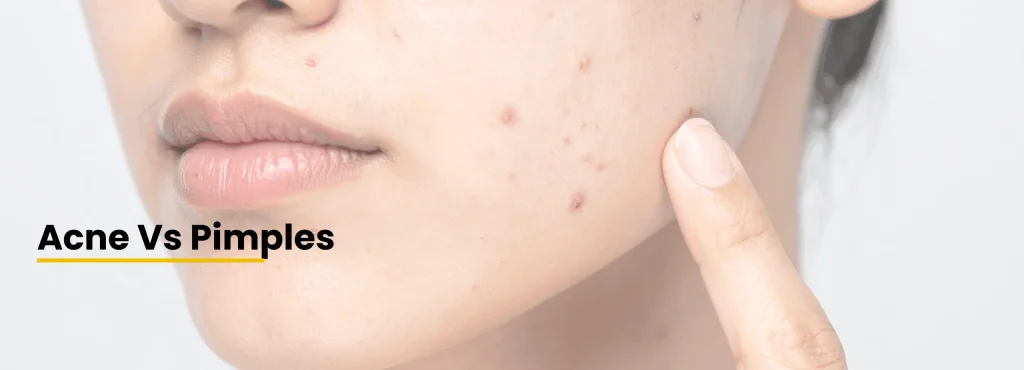
Have you ever looked in the mirror and thought, “Why do I keep getting pimples even after trying so many face washes?” You’re not alone. This is one of the most common concerns dermatologists hear every day.
Recently, a 22-year-old college student visited ACE Skin & Hair Clinic, Roorkee, worried about the small bumps on her face. She had been using different face washes, home remedies, and skincare products she found online. Some pimples would disappear, but within a few days, new ones would appear. She believed she simply had “pimples.”
After a detailed skin examination, Dr. Tanveer Fatima explained that she wasn’t dealing with occasional pimples anymore. She had early-stage acne, and without the right treatment, it could lead to permanent acne scars.
This is where many people get confused.
When people search “acne vs pimples,” they often think both words mean the same thing. While they are closely related, they are not exactly the same. Understanding the difference is important because the treatment for a single pimple is very different from the treatment for acne.
In this blog, you’ll learn the real difference between acne and pimples, why they happen, how dermatologists identify them, and when it’s time to seek professional treatment before the condition becomes more serious.
Why Do So Many People Confuse Acne and Pimples?
If you’ve ever called every breakout a “pimple,” you’re not alone. In fact, most people do.
This confusion happens because both acne and pimples appear on the face, can become red and painful, and often affect teenagers as well as adults. Social media, advertisements, and even skincare product labels use these words interchangeably, making it even harder to understand the difference.
The truth is much simpler.
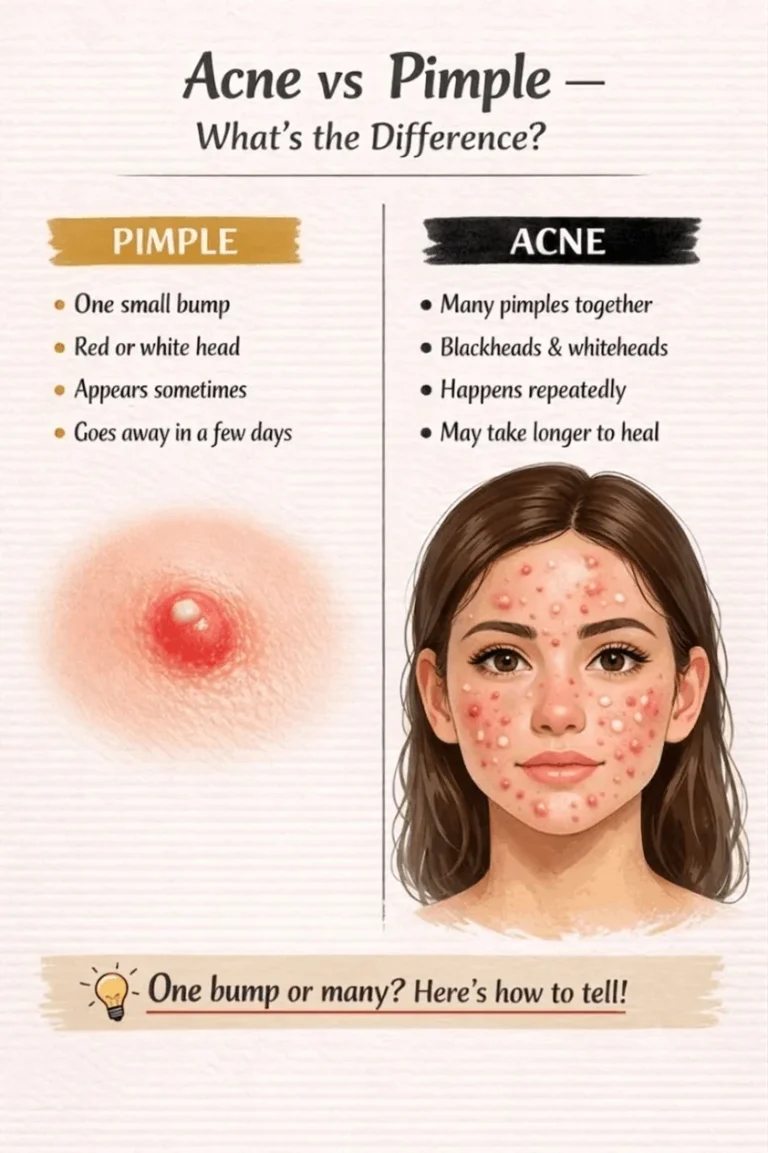
A pimple is just one visible skin lesion, while acne is a medical skin condition that causes different types of breakouts over time.
Think of it this way.
If you catch a cold once, you don’t say you have a chronic illness. But if the problem keeps returning again and again, it becomes a condition that needs proper treatment.
The same happens with acne.
One or two pimples before an important event usually aren’t a major concern. But if you continue getting new breakouts every week, notice blackheads and whiteheads appearing together, or start seeing marks after your pimples heal, your skin may actually be showing signs of acne.
This is why identifying the condition early can make a huge difference.
A Real Patient Story: "I Thought They Were Just Pimples"
Let’s understand this with a real-life example commonly seen in dermatology practice.
A 23-year-old working professional visited ACE Skin & Hair Clinic with a simple complaint.
“Doctor, I keep getting pimples. They go away for a few days, but new ones always come back.”
She had already tried several products recommended by friends and social media influencers. She changed her face wash almost every month and even applied toothpaste on active pimples because someone told her it would dry them overnight.
Unfortunately, nothing worked.
During the consultation, Dr. Tanveer Fatima carefully examined her skin instead of focusing only on the visible pimples.
The examination showed several signs that the patient herself had never noticed.
She had tiny clogged pores around the nose, multiple blackheads on the forehead, inflamed red bumps on both cheeks, and early acne marks that had started appearing after old breakouts healed.
Although she believed she had “just pimples,” the diagnosis was mild to moderate acne vulgaris.
Instead of giving random creams, Dr. Tanveer Fatima first identified the reason behind her recurring breakouts.
Her treatment plan included a gentle cleanser suitable for oily skin, a prescription retinoid for night-time use, an oil-free moisturizer, sunscreen, and lifestyle advice to reduce factors that could trigger acne.
Within 8 weeks, her skin showed visible improvement. New breakouts became less frequent, inflammation reduced, and the early acne marks gradually started fading.
The most important lesson from this case wasn’t that one cream solved the problem.
It was that correct diagnosis came before treatment.
Many people spend months treating acne like ordinary pimples. By the time they visit a dermatologist, they may already have acne scars that require more advanced treatment.
Acne vs Pimples: What's the Real Difference?
The easiest way to understand this is by remembering one simple fact.
Every pimple can be a part of acne, but not every person with a pimple has acne.
A pimple is one of the visible signs of acne, but acne itself is a long-term skin condition that develops when hair follicles become blocked with excess oil, dead skin cells, and bacteria.
For some people, acne begins with just a few pimples.
For others, it can gradually progress to blackheads, whiteheads, painful red bumps, pus-filled lesions, and even deep cysts.
This is why dermatologists don’t simply count how many pimples you have.
They look at your entire skin condition, including how often new breakouts appear, the type of lesions present, whether acne marks are developing, and if there are any signs of scarring.
Understanding this difference helps doctors choose the right treatment instead of treating only the visible symptoms.
| Pimples | Acne |
|---|---|
| Usually appears as one or a few breakouts | A long-term inflammatory skin condition |
| May heal on its own | Often keeps returning without treatment |
| Usually affects a small area | Can affect the face, chest, shoulders, and back |
| Less likely to leave scars | May cause pigmentation and permanent scars if untreated |
| Often temporary | Requires proper skincare and, in many cases, dermatologist-guided treatment |
Could Your "Pimples" Actually Be Acne?
Many people don’t realize that their skin condition has already progressed beyond occasional pimples.
Ask yourself these simple questions.
- Do you get new breakouts almost every week?
- Have your pimples started leaving dark spots after they heal?
- Do you notice blackheads, whiteheads, and painful bumps appearing together?
- Have over-the-counter creams stopped working?
- Do your breakouts return even after your skin looks clear for a few days?
If your answer is yes to more than one of these questions, you may not be dealing with simple pimples anymore.
Your skin could be showing the early signs of acne.
The good news is that acne responds much better to treatment when it is diagnosed early. Seeking expert advice before scars develop can save months of treatment later.
Common Mistakes People Make
Many people wrongly identify their skin type. Here are mistakes to avoid:
- Using harsh face wash daily
- Thinking oily skin does not need moisturizer
- Using too many skincare products
- Copying someone else’s skincare routine
- Ignoring sunscreen
These mistakes can damage your skin over time.
What Research Says: Why Does Acne Happen?
Many people believe that acne happens because the face is dirty. Others think eating one chocolate bar or missing a face wash causes breakouts.
The truth is more complex.
Research shows that acne develops because of four main reasons working together:
1. Your Skin Produces Too Much Oil
Our skin naturally produces oil, called sebum, to keep it soft and protected. But when the oil glands become overactive, the extra oil mixes with dead skin cells and blocks the pores.
Once the pores become blocked, breakouts start to appear.
2. Dead Skin Cells Block the Pores
Healthy skin sheds old skin cells every day. Sometimes these cells do not fall off properly and stay inside the pores. When they mix with excess oil, they create the perfect
environment for acne to develop.
3. Acne-Causing Bacteria Grow Inside the Pores
A type of bacteria called Cutibacterium acnes normally lives on everyone’s skin. It usually doesn’t cause problems. However, when pores become blocked, these bacteria multiply quickly, leading to redness, swelling, and painful pimples.
4. Inflammation Makes Acne Worse
Once bacteria grow inside the blocked pore, the body’s immune system reacts. This causes inflammation, making pimples larger, redder, and sometimes painful.
This is why acne is much more than just a “skin surface” problem. It begins underneath the skin before you even notice a new breakout.
Why Does Acne Keep Coming Back?
One of the most common questions dermatologists hear is:
“My pimples disappear for a few days. Why do they keep coming back?”
This happens because acne is a long-term skin condition. Treating only the visible pimples does not stop new ones from forming.
Several factors can trigger recurring acne, including hormonal changes, stress, lack of sleep, oily skincare products, and even touching your face frequently. In some people, conditions like PCOS also play an important role.
That is why many over-the-counter products give temporary relief but fail to prevent future breakouts.
The focus should always be on treating the cause, not just the pimple you can see.
Not every facial pimple is acne, but repeated breakouts should never be ignored. If you want to understand the everyday reasons behind facial pimples, read our detailed blog on Why Do Pimples Occur on the Face?
Common Mistakes That Can Make Acne Worse
During consultations, Dr. Tanveer Fatima often notices that patients unknowingly make mistakes that keep their acne active.
One of the biggest mistakes is trying every new skincare product that becomes popular on social media. Switching products too often does not give the skin enough time to respond and can sometimes make irritation worse.
Another common habit is squeezing or popping pimples. Although it may seem harmless, it increases inflammation and raises the risk of acne scars and dark spots.
Some people wash their face five or six times a day, believing it will remove oil. In reality, over-washing can strip the skin’s natural barrier, causing even more oil production.
Using toothpaste, lemon juice, baking soda, or other home remedies is another mistake. These ingredients may irritate the skin instead of treating acne.
The best approach is to keep your skincare routine simple and consistent while using products recommended for your skin type.
How Do Dermatologists Treat Acne?
There is no single cream that works for everyone.
Dermatologists first understand why acne is happening before deciding on treatment.
During a consultation, factors like age, skin type, acne severity, lifestyle, hormonal health, and previous treatments are carefully evaluated.
For mild acne, treatment may include medicated cleansers, prescription creams, and a proper skincare routine.
For moderate or severe acne, oral medicines, chemical peels, or other advanced treatments may be recommended depending on the patient’s condition.
The goal is not only to remove existing pimples but also to reduce future breakouts and prevent permanent scars.
This personalized approach gives much better long-term results than using random products without knowing the actual cause.
Why Early Treatment Is Important
Many people wait until acne becomes severe before visiting a dermatologist.
Unfortunately, acne does not always go away on its own.
Every untreated breakout increases the chance of developing acne marks and permanent scars. These scars often require advanced procedures like lasers, microneedling, or chemical peels, which take much longer than treating acne early.
Early treatment helps control inflammation, reduces new breakouts, protects the skin from scarring, and improves overall skin health.
Simply put, treating acne early is easier, faster, and often more affordable than treating acne scars later.
Why Patients Choose Dr. Tanveer Fatima for Acne Treatment
Acne affects every person differently. Some patients struggle with occasional breakouts, while others deal with painful acne, oily skin, and scars that affect their confidence.
At ACE Skin & Hair Clinic, Roorkee, Dr. Tanveer Fatima believes that successful treatment starts with understanding the patient’s skin rather than simply prescribing medicines.
Every treatment plan is personalized after carefully examining the skin, identifying possible triggers, and understanding the patient’s lifestyle. This helps provide treatment that is safe, effective, and suitable for long-term skin health.
Patients regularly visit the clinic from Roorkee, Haridwar, Saharanpur, Muzaffarnagar, Deoband, and nearby areas for expert care for acne, pimples, acne scars, oily skin, pigmentation, and other skin concerns.
The aim is not just to clear today’s breakout but to help patients achieve healthier skin and reduce future acne problems.
FAQs
1. Is acne the same as pimples?
No. A pimple is one type of skin lesion, while acne is a skin condition that causes different kinds of breakouts, including pimples, blackheads, whiteheads, and cysts.
2. Which is worse, acne or pimples?
Acne is usually more serious because it is a long-term condition that can lead to repeated breakouts and permanent scars if left untreated.
3. Can one pimple become acne?
A single pimple does not mean you have acne. However, if new pimples keep appearing repeatedly, it may be an early sign of acne.
4. Does oily skin always cause acne?
Not always. Many people have oily skin without acne. However, excess oil can increase the risk of clogged pores and breakouts.
5. Can stress cause acne?
Stress itself does not directly cause acne, but it can increase hormone levels that make acne worse in many people.
6. Should I pop my pimples?
No. Popping pimples can push bacteria deeper into the skin, increase inflammation, and leave permanent scars.
7. Can acne go away naturally?
Mild acne may improve over time, but persistent or recurring acne usually requires proper treatment to prevent scarring.
8. When should I see a dermatologist?
You should consult a dermatologist if your acne keeps returning, becomes painful, leaves dark marks, or does not improve after using skincare products for several weeks.
Conclusion
When it comes to Acne vs pimples , understanding the difference is the first step toward healthier skin. A single pimple is usually temporary, but repeated breakouts, blackheads, whiteheads, and painful bumps may be signs of acne that need proper attention.
The biggest mistake many people make is treating every breakout with random creams or home remedies without knowing the actual cause. As seen in the patient case shared earlier, the right diagnosis can completely change the treatment plan and help prevent long-term acne scars.
If your breakouts keep returning or are affecting your confidence, don’t ignore them. Early diagnosis and the right treatment can make a significant difference.
At ACE Skin & Hair Clinic, Roorkee, Dr. Tanveer Fatima provides personalized acne treatment based on your skin type, the severity of your condition, and the underlying cause. Patients from Roorkee, Haridwar, Saharanpur, Muzaffarnagar, Deoband, and nearby areas trust the clinic for evidence-based skin care and long-term acne management.
Healthy skin starts with understanding your skin, not just treating the symptoms.
ACE Clinic
Address: ACE Skin and Hair Clinic, Dehradun Rd, near Vinay Vishal hospital, Nehru Nagar, Roorkee, Uttarakhand 247667
Phone No: +91-9548732883
Email: [email protected]
Timings: 09:00 AM TO 10:00 PM
Google Map Location Listing: https://maps.app.goo.gl/xC7d3epyAZRNRtRw5