Too many skincare products can irritate and damage the skin barrier

Can Too Many Skincare Products Damage Your Skin?

Yes, using too many skincare products can damage or irritate your skin, especially when several active ingredients are layered together or products are not suited to your skin type. The problem is not simply the number of products in your routine. It is more often the combination of ingredients, frequency of use, unnecessary duplication and how your skin responds to them.

A cleanser, moisturizer and sunscreen may be enough for one person’s daily routine, while someone with acne, pigmentation or another skin concern may need additional products. The key is to build a routine around what your skin actually needs, rather than adding products because they are trending or promising faster results.

With social media full of trending serums, masks, toners, and “glass skin” routines, it is easy to copy someone else’s routine. But what works beautifully for one person may irritate another person’s skin.

What Happens When You Use Too Many Skincare Products?

Your skin is not designed to benefit from an unlimited number of ingredients.

The outermost layer of the skin, known as the stratum corneum, helps maintain hydration and protects against environmental irritants. It also forms part of the skin barrier.

When the skin is repeatedly exposed to irritating ingredients, excessive cleansing, frequent exfoliation or multiple strong active products, this barrier can become disrupted.

Once the barrier is compromised, the skin may become:

  • Dry and tight
  • Red or inflamed
  • More sensitive than usual
  • Rough or flaky
  • Prone to burning or stinging
  • More reactive to products that were previously tolerated

This can create a frustrating cycle: a person notices a new skin problem, adds another product to fix it, develops more irritation and then adds something else.

More products do not necessarily mean better skincare.

The Real Problem Is Often Ingredient Overlap

The number of bottles on your shelf is not the most useful way to judge whether your routine is excessive.

For example, someone may use:

  • A cleanser containing exfoliating acids
  • An exfoliating toner
  • An AHA serum
  • A BHA serum
  • A retinoid
  • A vitamin C product
  • An acne treatment
  • A clay mask

Each product may have a legitimate purpose individually. But using several potentially irritating products together can increase the overall burden on the skin.

This is why ingredient overlap matters more than simply counting products.

A Better Way to Look at Your Routine

Routine pattern Potential concern
Gentle cleanser + moisturizer + sunscreen Generally a simple foundational routine
Multiple products containing the same active Unnecessary duplication
Several exfoliating products used frequently Greater risk of irritation
Retinoid + multiple exfoliating actives May be too irritating for some skin types
Frequent product switching Difficult to identify what is helping or causing irritation
Numerous fragranced products on sensitive skin May increase irritation in susceptible individuals
Products chosen without considering skin type Can worsen dryness, oiliness or breakouts

This does not mean these combinations are automatically harmful for everyone. Tolerance varies, and dermatologists sometimes intentionally combine active ingredients as part of a treatment plan.

The important question is whether the overall routine is appropriate for your skin and the condition being treated.

Can Skincare Products Damage the Skin Barrier?
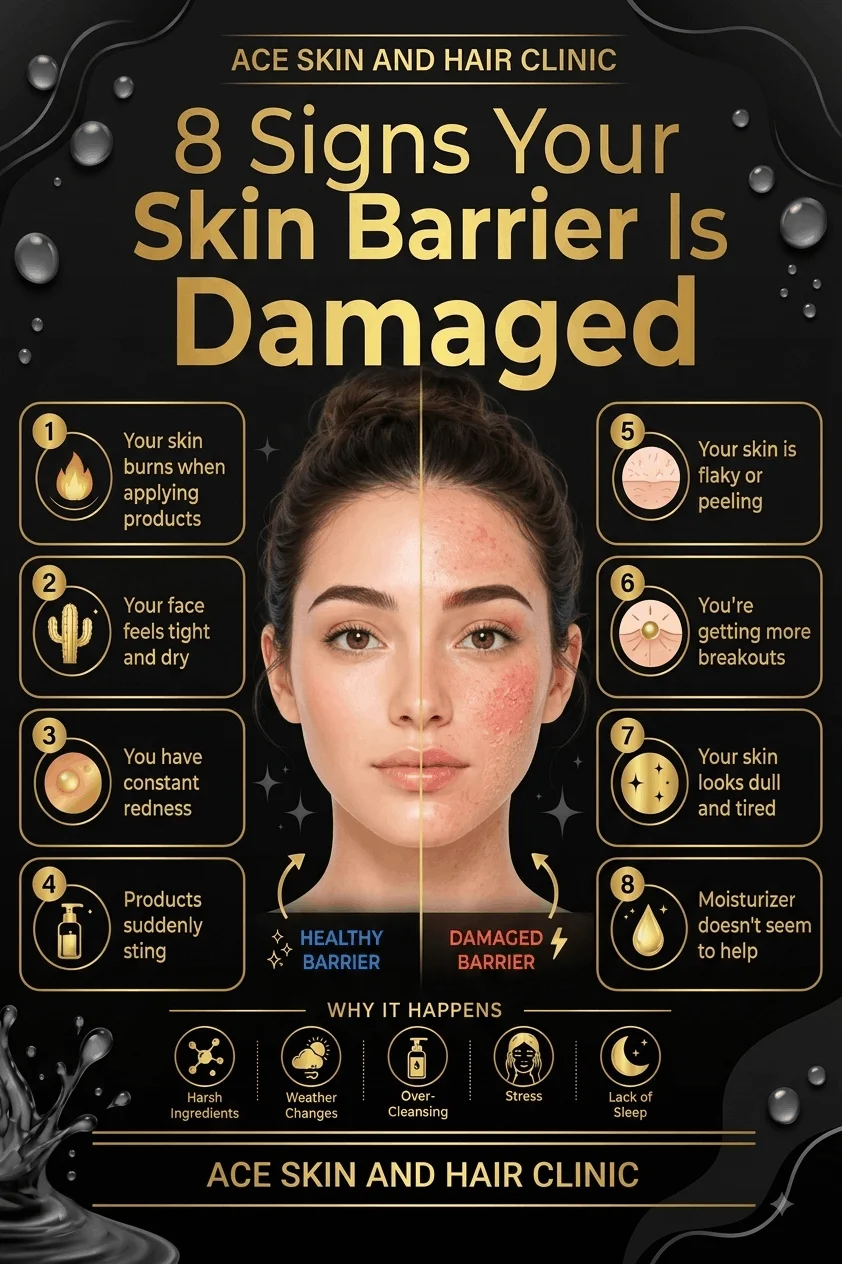
They can contribute to barrier disruption when they are irritating, overused or poorly tolerated.

The skin barrier contains lipids and structural components that help reduce water loss and protect the skin from external irritants. Excessive washing and exposure to irritating substances can interfere with this protective function.

For example, repeatedly cleansing the skin with harsh products or using strong exfoliating ingredients too frequently can leave the skin feeling dry, tight or uncomfortable.

However, it is important not to interpret every episode of dryness as permanent “skin barrier damage.”

Temporary irritation can improve once the triggering factor is removed and the skin is allowed to recover.

How Do You Know Your Skincare Routine Is Too Much?

The most useful clue is often a change in how your skin behaves.

If your skin was previously comfortable but suddenly starts burning, stinging, peeling or becoming unusually reactive after introducing several new products, your routine deserves a closer look.

Signs Your Skin May Be Overloaded or Irritated

1. Burning or stinging 

If basic products such as moisturizer suddenly sting when applied, the skin may be irritated.

2. Persistent redness

Redness that appears after introducing or increasing active products can indicate irritation, although persistent redness can also have other causes.

3. Tight, uncomfortable skin

A tight feeling after cleansing may suggest excessive cleansing or dryness.

4. Peeling and flaking

Visible peeling is not automatically evidence that a product is “working.” It can indicate irritation, particularly when accompanied by burning or redness.

5. Increased sensitivity

Products that were previously comfortable may suddenly cause stinging.

6. Unexpected breakouts

Not every breakout after starting skincare is “purging.” Some products may simply be irritating the skin or contributing to clogged pores.

Purging vs Irritation: Don't Confuse the Two

This is one of the most misunderstood parts of skincare.

When certain active ingredients increase cell turnover, some people may experience a temporary increase in visible breakouts in areas where they normally develop acne. This is often described as purging.

But irritation is different.

FeaturePossible PurgingPossible Irritation
Main complaintTemporary increase in breakoutsBurning, redness, dryness or discomfort
Typical locationAreas where you usually break outCan occur wherever the irritating product is applied
Skin sensationMay feel similar to usual acneOften stinging, burning or tight
FlakingNot the defining featureMay occur
What to considerProduct may be affecting cell turnoverRoutine may be too irritating

This distinction is important because continuing an irritating routine simply because you believe your skin is “purging” can prolong the problem.

If the reaction is severe, persistent or difficult to interpret, a dermatologist can help identify the cause.

Can Mixing Skincare Ingredients Cause Problems?

Potentially, yes.

The issue is not that two ingredients have a universally forbidden interaction. Rather, some combinations can increase irritation depending on the formulation, concentration, frequency and individual’s skin tolerance.

For example, layering several exfoliating acids with other potentially irritating active ingredients may be unnecessarily aggressive for some people.

Retinoids can also cause irritation, particularly when first introduced or used too frequently. That does not make them bad ingredients. They are well-established dermatological treatments and can be extremely useful when appropriately selected and introduced.

The principle is:

Effective does not mean stronger is always better.

What About Using Multiple Products for the Same Skin Concern?

This is another common problem.

Suppose someone wants to reduce dark spots. They purchase:

  • A vitamin C serum
  • An exfoliating toner
  • An acid serum
  • A pigmentation cream
  • A retinoid
  • A brightening mask

The person may assume that six products will produce six times the benefit.

Skin does not work that way.

A well-designed routine generally aims to use the fewest appropriate products that can reasonably address the person’s goals while maintaining tolerability.

This is particularly important for people with sensitive or acne-prone skin.

Why Constantly Changing Products Can Make Skincare Harder

Another issue with large routines is that they make it difficult to understand what is actually working.

Imagine introducing four new products in the same week. Two weeks later, the skin becomes irritated.

Which product caused it?

You may not know.

Similarly, if your skin improves, you may not know which product contributed to the improvement.

A more controlled approach makes it easier to evaluate your skin’s response.

This is one reason dermatological treatment plans are often introduced systematically rather than changing every part of a skincare routine at once.

Does Your Skin Type Change How Many Products You Can Use?

Yes, to an extent.

There is no universal “maximum number” of skincare products that every person should use.

Someone with oily, acne-prone skin may tolerate certain lightweight active products that would be excessive for someone with very dry or sensitive skin.

Likewise, someone with eczema-prone or highly reactive skin may need a much simpler routine.

Skin tendencyWhat usually deserves more attention
Oily/acne-proneNon-comedogenic products and avoiding unnecessary heavy layers
DryGentle cleansing and adequate moisturization
SensitiveMinimising potential irritants and introducing products carefully
CombinationBalancing hydration without overloading oilier areas
Mature/dryBarrier support, moisturization and targeted anti-ageing ingredients

These categories are useful starting points, but real skin is more complicated than a five-type classification. Your routine should also account for existing skin conditions, climate, medications, age and treatment goals.

How Many Skincare Products Do You Actually Need?

There is no medically fixed number.

However, most people can build a sensible foundation around three functions:

Clean → Moisturize → Protect

That usually means:

  1. A suitable cleanser, when cleansing is needed
  2. A moisturizer appropriate for the skin
  3. Broad-spectrum sunscreen during daytime

Additional products can then be introduced according to a specific concern.

For example:

Acne : a dermatologist may recommend targeted acne medication.

Pigmentation: treatment may involve carefully selected ingredients and strict photoprotection.

Dry or sensitive skin: barrier-supportive skincare may be prioritised.

Sign of photoaging : a retinoid or another evidence-based active may be considered depending on the individual.

The goal is not to create the longest routine. It is to create the most appropriate routine.

A Practical Way to Audit Your Skincare Shelf

Instead of throwing away half your products, evaluate them.

Step 1: Identify the purpose

Ask : What problem is this product supposed to solve?

If you cannot answer, you may not need it.

Step 2: Check for duplicate ingredients

Are three different products performing essentially the same job?

You may be creating unnecessary overlap.

Step 3: Look at your active ingredients

List products containing:

  • Retinoids
  • AHAs
  • BHAs
  • Vitamin C
  • Benzoyl peroxide
  • Other exfoliating or acne-focused ingredients

Then consider how frequently you use them.

Step 4: Look at your skin’s response

Your skin should not have to remain constantly red, burning or peeling for a routine to be considered effective.

Step 5: Change one variable at a time

If possible, avoid introducing several new actives simultaneously.

This makes it easier to identify tolerance and effectiveness.

What Should You Do If Your Skin Is Already Irritated?

If you suspect your skincare routine is causing irritation, the first priority is generally to identify and reduce the likely trigger rather than adding another treatment product.

A simplified routine may be appropriate temporarily, depending on the severity and cause of the reaction.

Gentle cleansing, appropriate moisturization and sun protection can form the foundation while the skin settles.

However, persistent burning, swelling, severe redness, blistering, worsening rash or significant discomfort should not simply be labelled “skin barrier damage.” Other skin conditions or allergic reactions can produce similar symptoms and may require medical assessment.

When Should You See a Dermatologist?

Consider professional evaluation if:

  • Irritation continues despite simplifying your routine.
  • Your face repeatedly becomes red, itchy or painful.
  • You develop significant swelling or a widespread rash.
  • Your skin burns with most products.
  • You cannot identify which product is causing the reaction.
  • Acne or pigmentation is worsening despite multiple products.
  • You repeatedly experience peeling after using active ingredients.
  • You have been treating a suspected skin condition yourself without improvement
A dermatologist can distinguish between simple irritation, allergic contact dermatitis, acne, rosacea, eczema and other conditions that may look similar.
 

A Realistic Example: When More Skincare Creates More Problems

Consider a person concerned about acne and pigmentation.

They begin with a cleanser and sunscreen but are unhappy with their progress. Over several weeks, they add an exfoliating toner, vitamin C serum, acid treatment, retinoid and spot treatment.

Initially, they assume the routine is becoming more effective.

Instead, their skin becomes dry, red and sensitive. They begin experiencing more visible bumps and interpret the reaction as “purging,” so they add another acne product.

The problem is no longer simply acne or pigmentation.

The routine itself has become part of the problem.

A dermatologist assessing this situation would not necessarily add another product. The first step may be to determine what is causing the irritation, simplify the routine and then reintroduce appropriate treatment in a controlled way.

This illustrates an important principle in skincare:

The best routine is not the one with the most products. It is the one that provides useful treatment without overwhelming the skin.

Common Skincare Myths That Need Rethinking

“If it burns, it means it is working.”

Not necessarily. Burning can be a sign of irritation.

“Peeling means the product is removing dead skin.”

Peeling can occur with certain active ingredients, but visible peeling accompanied by discomfort can also indicate irritation

“Natural products cannot irritate the skin.”

Natural does not automatically mean non-irritating. Botanical ingredients, essential oils and fragrances can cause reactions in susceptible individuals.

“More active ingredients will give faster results.”

Increasing the number of actives can increase irritation without proportionally increasing the benefit.

“Everyone needs a 10-step skincare routine.”

There is no medical requirement for a fixed number of skincare steps. The appropriate routine depends on the person’s skin and treatment goals.

FAQs

Can too many skincare products damage your skin?

Yes. Excessive use of irritating products, over-exfoliation, harsh cleansing or poorly matched combinations can contribute to dryness, irritation and disruption of the skin barrier.

How do I know if I am using too many skincare products?

There is no specific product count that defines “too many.” Look instead for unnecessary ingredient overlap, frequent use of strong actives and signs such as persistent dryness, burning, redness, peeling or increased sensitivity.

Can too many products cause acne?

Some skincare products may contribute to clogged pores or acne in susceptible people. Using numerous products also makes it harder to identify which product may be contributing to breakouts.

Should I stop all skincare if my skin is irritated?

Not necessarily. Completely stopping everything may not always be appropriate. A simpler routine may be preferable, but the cause and severity of irritation matter. Persistent or severe reactions should be assessed by a dermatologist.

Is a 10-step skincare routine bad?

Not automatically. The number of steps itself is not the issue. The formulation, ingredients, frequency and suitability for your skin matter more.

Can using too many serums damage the skin?

Multiple serums are not automatically harmful, but layering several active serums can increase irritation or create unnecessary ingredient overlap. A targeted routine is often easier to tolerate and maintain.

How long does irritated skin take to recover?

There is no single recovery time. It depends on what caused the irritation and how severe it is. If symptoms persist or worsen after removing a suspected trigger, seek professional evaluation.

Final Takeaway

Can too many skincare products damage your skin? Yes—but the real issue is not simply the number of products. It is whether your routine contains unnecessary overlap, excessive active ingredients or products that your skin cannot tolerate.

Healthy skincare is not about collecting more serums, acids and masks. It is about understanding what your skin needs, why you are using each product and whether the routine is actually improving your skin without causing irritation.

If your skin is persistently red, burning, peeling, breaking out or becoming unusually sensitive despite changing products, it may be time to stop experimenting and get a professional assessment.

For persistent skin concerns, dermatologist in Roorkee Dr. Tanveer Fatima at ACE Skin & Hair Clinic, can assess the underlying cause and help create a skincare or treatment plan suited to your skin rather than simply adding more products.

ACE Clinic

Address: ACE Skin and Hair Clinic, Dehradun Rd, near Vinay Vishal hospital, Nehru Nagar, Roorkee, Uttarakhand 247667

Phone No: +91-9548732883

Email: [email protected]

Timings: 09:00 AM TO 10:00 PM

Google Map Location Listing:  https://maps.app.goo.gl/xC7d3epyAZRNRtRw5