
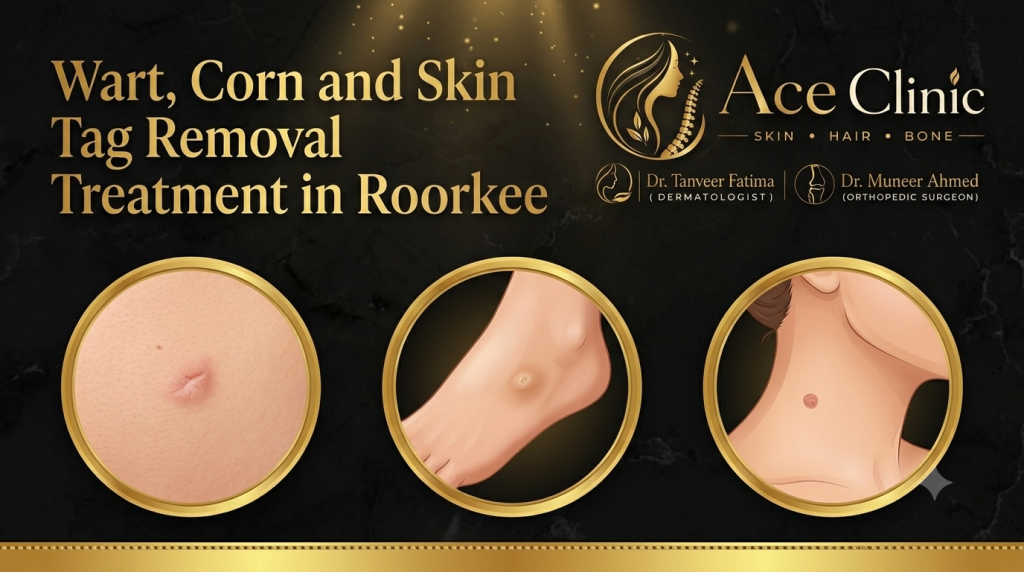
If you have a rough bump on your hand, a hard spot under your foot, or a small flap of skin on your neck, you may be searching for a safe wart, corn and skin tag removal treatment. You are not alone. These three problems are very common, and many people ignore them for years or try risky home fixes. This guide explains how they differ, how a dermatologist in Roorkee treats them, whether they come back, and how long healing takes.
Wart, Corn and Skin Tag: What Is the Difference?
They can look alike, but they have different causes. Knowing which one you have decides the right treatment.
Warts are caused by a virus called HPV (human papillomavirus). They look like rough, raised bumps, sometimes with tiny black dots inside. They can appear on hands, fingers, feet and face. Warts are contagious. They can spread to other parts of your body or to other people through touch, shared towels or walking barefoot in wet places.
Corns are not an infection. They are thick, hard layers of skin that form when the same spot gets pressed or rubbed again and again, usually from tight shoes or the way you walk. A corn has a hard centre and is often painful when pressed. They usually appear on toes or the soles of the feet.
Skin tags are small, soft, harmless pieces of skin that hang from a thin stalk. They show up where skin rubs against skin or clothing, like the neck, underarms, groin and eyelids. They are not contagious and are not cancer, but they can be irritating, catch on jewellery, or simply look bad.
A quick way to remember: warts come from a virus, corns come from pressure, and skin tags come from friction and body changes.
Do You Really Need Treatment?
Skin tags are harmless, so removal is often a matter of comfort or looks. Warts and corns are different. Warts can spread and multiply if left alone, and corns can become very painful and make walking difficult.
Also, many things that look like a wart or tag are something else. A mole that changes shape, a bump that bleeds, or a growth that does not heal can need a proper check. This is why seeing a skin specialist in Roorkee before treating anything yourself is the safer choice.
Wart, Corn and Skin Tag Removal Treatment Options
The right method depends on the type, size, location and your skin. Here are the common options a dermatologist may use.
For warts:
- Cryotherapy: The wart is frozen with liquid nitrogen. It may sting for a moment, and a small blister can form before the wart falls off. Warts often need more than one session.
- Electrocautery: A fine heated tip removes the wart under local numbing.
- Laser treatment: Useful for stubborn warts or those in sensitive spots.
- Medicines: Special creams or solutions, often used along with other methods.
For corns:
- The thick, dead skin is carefully pared down by the doctor.
- Medicated treatments soften the hard layer.
- Most importantly, the cause is fixed, such as changing footwear or using cushioned pads.
For skin tags:
- Electrocautery: The tag is removed and the base sealed, so bleeding is minimal.
- Cryotherapy: Freezing causes the tag to dry up and fall off.
- Minor surgical removal: Used for larger tags, done under local anaesthesia.
All of these are quick day-care procedures. You walk in, get treated, and go home the same day.
Is Removal Permanent? Will They Come Back?
This is the most common worry, and an honest answer helps you plan.
Skin tags: Once a tag is properly removed, that same tag does not return. However, you may get new ones in the future, especially if you are overweight, diabetic or prone to them.
Corns: A corn can return if the cause remains. If you keep wearing tight shoes or the pressure point stays, the corn will build up again. Treating the root cause is what makes the result last.
Warts: Warts are the trickiest. Because a virus is involved, a wart can sometimes return, even after it looks completely gone, particularly if your immunity is low. This does not mean the treatment failed. It is the nature of the virus. Proper, complete treatment and follow-up greatly reduce the chances of a repeat.
So the real answer is: removal can be long-lasting, but not always guaranteed forever. Following your doctor’s advice after treatment makes a big difference.
How Long Does Healing Take?
Healing time differs from person to person, but here is a general idea:
- Skin tags: Usually heal in about 5 to 10 days. A tiny scab forms and falls off on its own.
- Warts: Often take 2 to 4 weeks to settle after each session. Stubborn warts, especially on the feet, may need several sessions spaced a few weeks apart.
- Corns: Pain usually eases within a few days. Full recovery depends on how soon pressure on the area is reduced.
Keep the area clean and dry, do not pick the scab, and protect the skin from sun and friction while it heals.
Can Food Cause Warts, Corns or Skin Tags?
Let’s clear this up, because there is a lot of confusion.
- Warts are caused by a virus, not by food. But a weak immune system makes it easier for the virus to spread, so a balanced diet with enough protein, fruits and vegetables supports your body.
- Corns have nothing to do with food. They come from pressure and friction.
- Skin tags are not caused directly by any one food. However, they are linked with weight gain, insulin resistance and diabetes. A diet very high in sugar, sweets, cold drinks and refined flour can push you in that direction over time. If you keep getting new skin tags, it is a good idea to check your blood sugar.
So no single food “creates” these growths, but a healthy diet and healthy weight help keep skin and immunity strong.
Are Home Remedies Risky?
Many people try apple cider vinegar, garlic, nail polish, tape, blades or even tying a thread around a skin tag. Please be careful. Here is why.
- Acids and vinegar can burn healthy skin around the growth and leave dark marks or scars.
- Cutting with scissors or a blade can cause heavy bleeding, infection and scarring. Skin tags near the eyes or neck are especially risky.
- Tying a thread may cause pain and infection, and the tag may not fully come off.
- Picking at a wart can spread the virus to nearby skin.
- Scraping a corn at home can cause cuts, which is dangerous for people with diabetes.
Most important, you may be treating something that is not what you think it is. A proper diagnosis comes first.
A Simple Case Study
This is a general example to explain how treatment works. It is not a real patient and not from any specific clinic.
Imagine a 32-year-old man who worked in a shop and stood for long hours. He developed a painful hard spot under his foot and thought it was a corn. For months he scraped it with a blade and used home remedies. The spot got worse, and a few more small bumps appeared nearby.
When he finally visited a skin doctor, the diagnosis was a plantar wart, not a corn. Because it was a viral wart, his home scraping had actually spread it. The doctor treated it with cryotherapy over three sessions, a few weeks apart, and advised him to keep his feet dry and avoid walking barefoot in damp areas. Within about two months, the area healed and the pain was gone.
The lesson is simple. A wart and a corn can look the same, but they need different treatment. A wrong guess can cost you time, comfort and money.
Why Choose Dr. Tanveer Fatima for Treatment?
When you search for a dermatologist in Roorkee, you want someone who explains things clearly and treats you properly, not someone who rushes you. At our clinic, Dr. Tanveer Fatima focuses on:
- Correct diagnosis first. Every growth is examined carefully, because not every bump is a wart, corn or tag.
- The right method for you. Treatment is chosen based on your skin type, the location and size of the growth, and your health history, not a one-size-fits-all approach.
- Simple, honest guidance. You are told how many sessions you may need, what the healing will look like, and the real chance of recurrence.
- Comfortable, safe procedures. Clean, hygienic techniques with minimal pain and minimal scarring.
- Follow-up and aftercare. Clear instructions so you heal well and reduce the chance of the problem returning.
If you are looking for a trusted skin specialist in Roorkee for wart, corn and skin tag removal treatment, a consultation is the best first step.
FAQs
Are warts contagious?
Yes. Warts spread through direct touch or shared items like towels and razors. Keep them covered and avoid touching or picking them.
Is skin tag removal painful?
Very little. The doctor usually applies a numbing cream or injection, so you may feel only a slight pinch.
Will skin tag removal leave a scar?
When done by a dermatologist, scarring is minimal. A small light mark may remain for a short time and usually fades.
Do warts come back after removal?
They can, because the virus may stay in the skin. Complete treatment and follow-up lower the risk.
What is the difference between a wart and a corn?
A wart is caused by a virus and may have tiny black dots. A corn is caused by pressure and has a hard, glassy centre. Pressing from the sides hurts more in a wart, while pressing from the top hurts more in a corn.
Why do corns keep coming back?
Because the pressure or friction that caused them is still there. Better footwear and correcting the cause helps.
Can I remove a skin tag at home?
It is not recommended. It can lead to bleeding, infection and scarring. Let a doctor do it safely.
Does apple cider vinegar remove warts?
It may burn the skin and cause marks. There is no reliable proof that it works safely.
Are skin tags dangerous?
No, they are usually harmless. But if a growth changes colour, grows fast or bleeds, show it to a doctor.
How many sessions will I need?
Skin tags usually need one. Corns may need one or a few. Warts often need two to four sessions, depending on size and location.
Conclusion
Warts, corns and skin tags may look like small problems, but handling them the wrong way can make them bigger. Warts come from a virus, corns from pressure, and skin tags from friction and body changes. Each needs its own approach, and the right wart, corn and skin tag removal treatment gives you quick, safe and lasting relief. Avoid blades, acids and threads at home, and get the growth checked first.
If you are in Roorkee or nearby and want a proper diagnosis and safe treatment, visit Dr. Tanveer Fatima. Book your appointment today and get your skin checked by an experienced dermatologist.
ACE Clinic
Address: ACE Skin and Hair Clinic, Dehradun Rd, near Vinay Vishal hospital, Nehru Nagar, Roorkee, Uttarakhand 247667
Phone No: +91-9548732883
Email: [email protected]
Timings: 09:00 AM TO 10:00 PM
Google Map Location Listing: https://maps.app.goo.gl/xC7d3epyAZRNRtRw5