
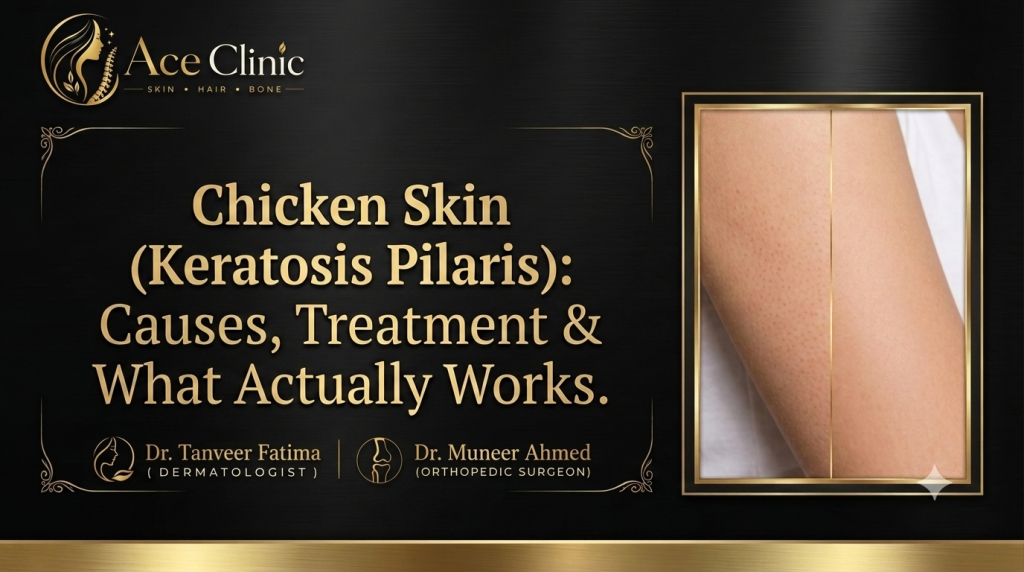
You’re getting ready, you look at your arm under the light, and there it is again those small, rough bumps that never seem to go away no matter how much lotion you use. Most people call it “chicken skin” because that’s exactly what it looks like. It’s not dirty skin, it’s not acne, and it’s definitely not something you did wrong. It’s one of the most common skin conditions out there, and yet almost nobody talks about it properly.
This blog breaks it down in plain language what it actually is, why it shows up, what makes it worse, and what genuinely helps.
What Is Chicken Skin? (And Why It's Not Acne)
Chicken skin is the everyday name for a condition called keratosis pilaris. It happens when a protein called keratin builds up around hair follicles and blocks them, forming small, rough bumps. These bumps can be skin-colored, red, or slightly brown depending on your skin tone.
People often mistake it for acne because both show up as bumps. But acne is caused by clogged pores mixing with oil and bacteria, while chicken skin is purely about keratin blocking hair follicles. There’s no oil, no bacteria, and no infection involved. That’s also why acne treatments usually don’t do much for chicken skin they’re solving a different problem entirely.
What Causes Chicken Skin on Arms and Legs
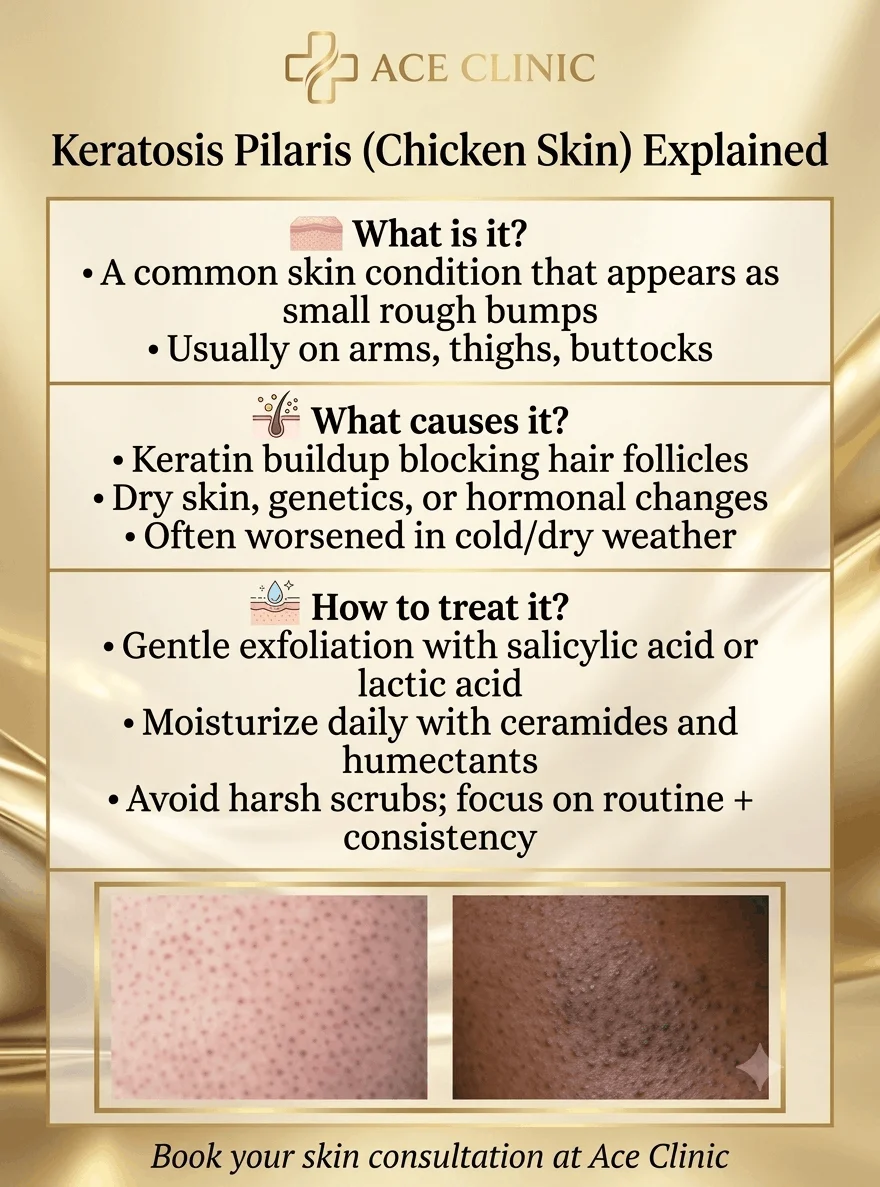
The short answer: excess keratin. But why does that happen in the first place?
- Dry skin — Keratin builds up more easily when skin isn’t retaining enough moisture, which is why chicken skin often looks worse in dry conditions.
- Genetics — This is the biggest factor. If a parent has it, there’s a strong chance you will too.
- Skin conditions like eczema — People with eczema or generally sensitive, dry skin tend to get keratosis pilaris more often.
- Hormonal changes — Some people notice it appearing or worsening during puberty or pregnancy.
It most commonly shows up on the upper arms, thighs, and sometimes the cheeks or buttocks basically anywhere with a lot of hair follicles and drier skin.
Who Gets Chicken Skin? (Genetics, Age & Skin Type)
Chicken skin is incredibly common it affects a large percentage of people at some point in their life, most often starting in childhood or the teenage years. It tends to peak during adolescence and often improves gradually with age, though for some people it sticks around into adulthood.
People with naturally dry skin, or a family history of it, are far more likely to develop it. It’s not linked to hygiene, diet, or anything you’re “doing wrong” it’s mostly written into your skin type from the start.
Chicken Skin vs Acne vs Folliculitis — How to Tell the Difference
These three conditions get confused constantly because they all show up as small bumps. Here’s a simple way to tell them apart:
| Feature | Chicken Skin (Keratosis Pilaris) | Acne | Folliculitis |
|---|---|---|---|
| Cause | Keratin buildup blocking hair follicles | Oil and bacteria clogging pores | Infected or inflamed hair follicles |
| Appearance | Small, rough, sandpaper-like bumps | Whiteheads, blackheads, or red inflamed pimples | Red bumps, sometimes with a visible pus point |
| Feel | Dry, rough texture | Can be tender or sore | Often itchy or slightly painful |
| Common areas | Upper arms, thighs, cheeks | Face, chest, back | Anywhere with hair, especially after shaving or sweating |
| Pain or pus | Usually none | Sometimes | Often, especially if infected |
| Worsens with | Dry weather, harsh soaps | Oily skin, hormonal changes | Sweat, friction, shaving, tight clothing |
If your bumps are rough and dry rather than inflamed or filled with pus, chicken skin is the most likely explanation.
Why Chicken Skin Gets Worse in Winter
If you’ve noticed your arms feel bumpier in December than in July, that’s not in your head. Cold air holds less moisture, indoor heating dries out the air further, and your skin loses hydration faster than usual. Since keratosis pilaris is closely tied to dry skin, this seasonal dryness makes the bumps more noticeable and often rougher to the touch. This is also why many people find it improves slightly in humid summer months without changing their routine at all.
Common Mistakes That Make Chicken Skin Worse
This is the part most articles skip, and it’s honestly where most people go wrong.
- Scrubbing hard with a loofah or body scrub — It feels productive, but it irritates the skin and can make the bumps redder and angrier instead of smoother.
- Using harsh, drying soaps — Bar soaps that strip natural oils leave skin drier, which feeds right back into the keratin buildup problem.
- Skipping moisturizer after a hot shower — Hot water dries out skin fast, and if you don’t lock in moisture within a few minutes, the dryness cycle just continues.
- Picking at the bumps — It doesn’t clear them faster, and it raises the risk of scarring or dark marks left behind.
- Expecting overnight results — Chicken skin responds to consistency over weeks, not a single good skincare day.
How to Get Rid of Chicken Skin: What Actually Works
There’s no permanent, one-time cure, but it can be managed really well with the right routine.
Moisturizers with lactic acid or urea These ingredients gently dissolve the excess keratin instead of just sitting on top of the skin like a regular lotion. Look for creams specifically listing lactic acid, urea, or salicylic acid on the label.
Gentle chemical exfoliation A mild exfoliating product used 2-3 times a week can help clear dead skin buildup around the follicles. The key word here is gentle physical scrubbing does more harm than good.
Retinoid-based creams These help speed up skin cell turnover, which can reduce the buildup causing the bumps. They’re best used under guidance since they can be irritating if introduced too fast.
In-clinic treatments for stubborn cases For bumps that don’t respond to home care, a dermatologist may suggest options like chemical peels or laser treatments, which target the deeper buildup more directly than over-the-counter products.
Home Remedies: Which Ones Help and Which Ones Don’t
Actually help:
- Coconut oil or a thick moisturizer applied right after showering, while skin is still damp
- Oatmeal baths, which soothe dry, irritated skin
- A humidifier at home during dry winter months
Don’t really help (and sometimes hurt):
- Baking soda scrubs — too harsh, disrupts the skin barrier
- Lemon juice — commonly suggested online, but it can irritate skin and cause sun sensitivity
- Aggressive dry brushing — creates micro-tears that worsen redness
How Long Does It Take to See Results?
With a consistent routine using the right ingredients, most people start noticing smoother skin within 4 to 6 weeks. Full improvement, especially in more stubborn areas, can take a few months. The biggest reason people feel like “nothing is working” is stopping the routine too early, right before results would have started showing.
Can Chicken Skin Be Cured Permanently?
Here’s the honest answer there’s no permanent cure, since it’s largely genetic. But it absolutely can be managed to the point where it’s barely noticeable, and for many people, it naturally fades with age. Think of it less like a condition to “cure” and more like something to keep in check with a routine, similar to how dry skin needs ongoing care rather than a one-time fix.
When to See a Dermatologist for Chicken Skin
Most cases can be managed at home, but it’s worth getting it checked if:
- The bumps are getting more inflamed, red, or itchy over time
- Home care hasn’t shown any improvement after a couple of months
- You’re unsure whether it’s chicken skin, acne, or folliculitis
- The affected area is spreading or bothering you a lot, whether physically or in terms of confidence
A dermatologist can also prescribe stronger creams than what’s available over the counter, which can speed things up significantly for stubborn cases.
Chicken Skin Treatment at Ace Clinic
If home remedies and regular moisturizers haven’t made a real difference, it’s worth getting a proper skin assessment instead of guessing further.
At Ace Clinic, Dr. Tanveer Fatima examines the skin closely to confirm it’s actually keratosis pilaris and not something else being mistaken for it, then builds a treatment plan suited to your skin type whether that’s a prescription-strength cream, a course of gentle peels, or simply the right combination of products used correctly.
For anyone tired of dealing with rough, bumpy skin on their own, this kind of personalized guidance usually gets results much faster than trial and error.
FAQs
Does chicken skin go away on its own?
It can fade naturally with age for some people, but it usually needs consistent skincare to improve rather than disappearing completely on its own.
Is chicken skin caused by a vitamin deficiency?
Not typically. It's mostly genetic and related to keratin buildup, though very dry or poorly moisturized skin can make it look worse.
Can chicken skin be genetic?
Yes, genetics is the strongest known factor. If a close family member has it, you're more likely to develop it too.
Why does chicken skin get worse in winter?
Cold, dry air reduces skin moisture, and since keratosis pilaris is closely linked to dryness, the bumps tend to become more noticeable and rougher in colder months.
Is chicken skin contagious?
No. It's not caused by bacteria, a virus, or fungus, so it can't spread to another person through contact.
What's the fastest way to reduce chicken skin bumps?
Consistent use of a lactic acid or urea-based moisturizer, applied right after showering, tends to show the fastest visible improvement when done daily.
Content
Final Takeaway
Chicken skin, medically known as keratosis pilaris, happens when keratin builds up and blocks hair follicles, creating small rough bumps, most often on the arms and thighs.
It’s largely genetic, tends to worsen in dry winter weather, and is often confused with acne or folliculitis, though the causes and treatments are completely different. It can’t be cured permanently, but it responds well to consistent care using ingredients like lactic acid, urea, or retinoids, along with avoiding harsh scrubbing and drying soaps.
Most people see visible improvement within 4 to 6 weeks of a proper routine, and for stubborn cases, a dermatologist can offer stronger, faster-acting options.
ACE Clinic
Address: ACE Skin and Hair Clinic, Dehradun Rd, near Vinay Vishal hospital, Nehru Nagar, Roorkee, Uttarakhand 247667
Phone No: +91-9548732883
Email: [email protected]
Timings: 09:00 AM TO 10:00 PM
Google Map Location Listing: https://maps.app.goo.gl/xC7d3epyAZRNRtRw5