
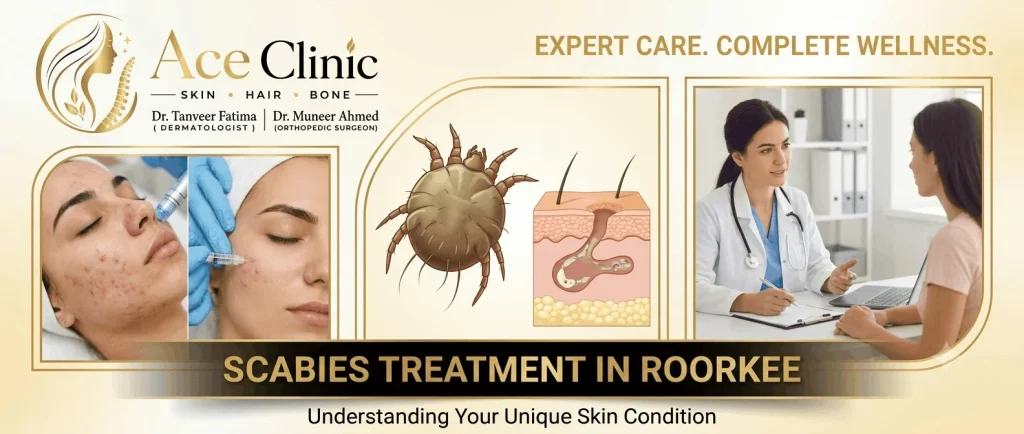
Scabies is caused by a tiny mite called Sarcoptes scabiei that burrows into the top layer of your skin. You can’t see it with the naked eye, but you can absolutely feel it. The mite lays eggs under the skin, and your body’s reaction to this the itching, the rash is basically an allergic response to the mites, their eggs, and their waste.
It’s not about being “unclean.” That’s one of the biggest myths around scabies in India, and it stops people from seeking treatment early out of embarrassment.
Why Scabies Cases Are Rising in Roorkee
A few local factors make Roorkee a fairly common spot for scabies outbreaks:
- Hostel and PG culture — With a large student population, shared rooms, shared bedding, and common washrooms create easy conditions for mites to pass from one person to another.
- Humid and warm weather — Especially during monsoon and the months following it, skin stays damp longer, which mites tend to favor.
- Shared laundry and gym spaces — Towels, sports gear, and bedding that aren’t washed in hot water often carry mites longer than people assume.
- Delayed diagnosis — Many people initially treat it as a fungal infection or heat rash, applying random creams for weeks before consulting a dermatologist, which gives it more time to spread to family members or roommates.
Early Symptoms People Often Ignore
Scabies doesn’t always look dramatic in the beginning, which is exactly why it gets missed. Watch out for:
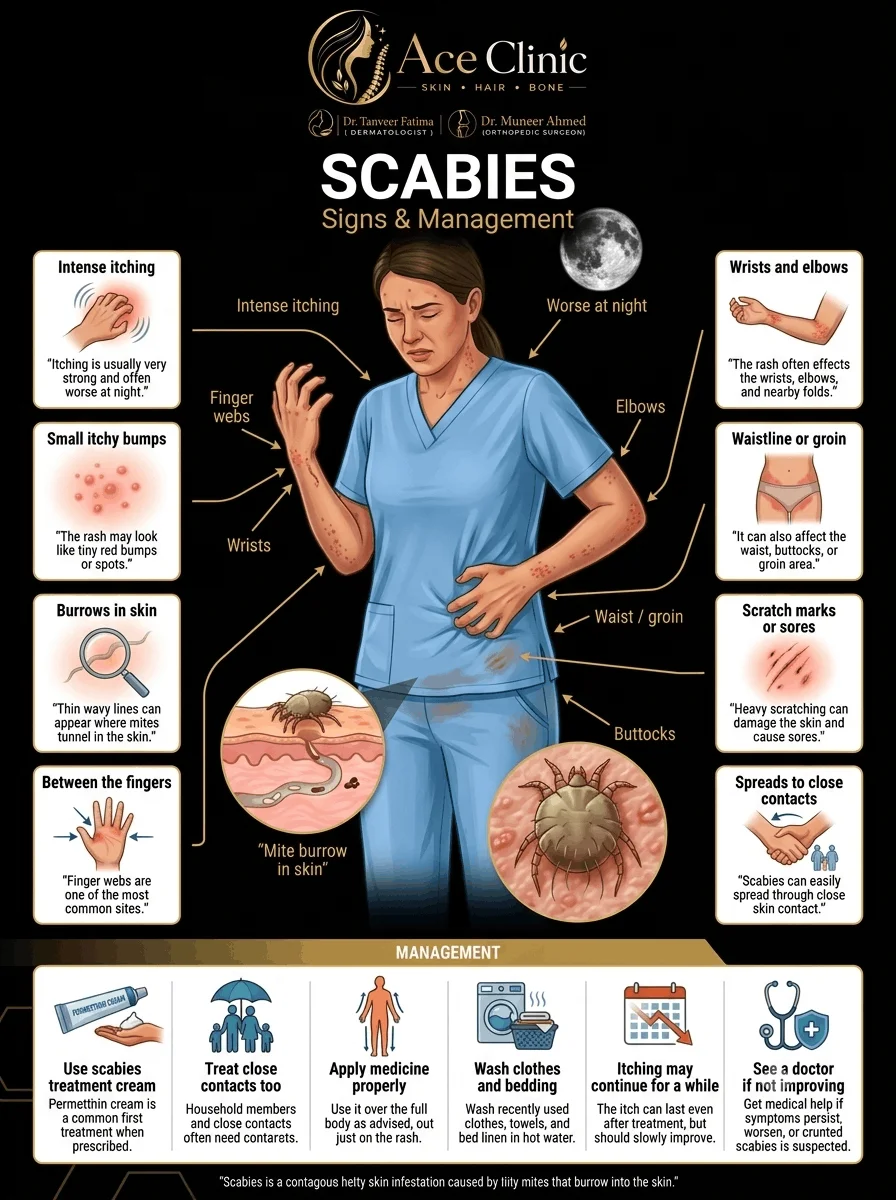
- Itching that gets worse at night — this is one of the most telling signs, since mites are more active in warmth.
- Thin, grey or skin-colored lines on the skin — these are burrow tracks, often seen between fingers, wrists, or around the waist.
- Small red bumps or blisters, sometimes mistaken for pimples or insect bites.
- Itching in specific zones — between fingers, inner wrists, elbows, armpits, waistline, and genital area are classic spots.
If you’re noticing itching that disturbs your sleep and isn’t going away with regular moisturizer, it’s worth getting it checked rather than waiting it out.
Scabies vs Other Skin Conditions: A Quick Comparison
People often confuse scabies with fungal infections or general allergies since the symptoms can look similar on the surface. Here’s a simple breakdown:
| Feature | Scabies | Fungal Infection | Skin Allergy |
|---|---|---|---|
| Cause | Mite (Sarcoptes scabiei) burrowing into skin | Fungus growing on skin surface | Reaction to allergen (soap, food, dust, etc.) |
| Itching pattern | Worse at night | Constant, but not specifically night-heavy | Sudden onset, varies |
| Appearance | Thin burrow lines, small bumps between fingers/wrists | Circular, scaly, reddish patches with defined edges | Red patches, hives, sometimes swelling |
| Spread | Spreads through skin contact and shared bedding/clothes | Spreads in humid areas, tight clothing, shared towels | Doesn’t spread person to person |
| Common areas | Between fingers, wrists, waistline, genitals | Groin, underarms, feet, skin folds | Anywhere exposed to the allergen |
| Treatment | Prescription anti-scabies cream/lotion, sometimes oral medication | Antifungal cream or tablets | Antihistamines, avoiding the trigger |
This is exactly why self-diagnosing from a home remedy video isn’t a great idea the treatment for one condition can actually make another worse.
How Scabies Spreads
Scabies mostly spreads through:
- Prolonged skin-to-skin contact (family members, roommates, partners)
- Sharing bedsheets, towels, or clothes without washing in hot water
- Close contact in crowded living spaces like hostels and PGs
It doesn’t spread through brief contact like a handshake, so there’s no need to panic but anyone sharing a bed or clothing with an infected person should get examined too.
Diagnosis: What Happens During a Dermatologist Visit
A dermatologist usually diagnoses scabies by physically examining the skin, especially the classic burrow lines. In some cases, a small skin scraping is examined under a microscope to confirm mite presence or eggs. This step matters because it rules out fungal infections or eczema, which need completely different treatment.
Treatment Options Available in Roorkee
Scabies treatment typically includes:
- Topical scabicide creams or lotions (like permethrin), applied to the entire body, not just the itchy spots, and left on for a specific number of hours as instructed.
- Oral medication in more widespread or resistant cases.
- Antihistamines to control itching while the treatment works, since the itching can continue for a couple of weeks even after the mites are gone.
- Treatment for everyone in close contact, even if they aren’t showing symptoms yet, to fully break the cycle.
Roorkee has dermatology clinics equipped to handle this properly, so there’s no real need to rely on general physicians or over-the-counter creams that don’t target the mite directly.
Home Care Tips That Support Treatment
Along with medical treatment, these steps help speed up recovery and prevent re-infection:
- Wash all clothes, bedsheets, and towels in hot water and dry them under direct sunlight or high heat.
- Avoid scratching, even though it’s tempting it can lead to secondary skin infections.
- Vacuum mattresses, sofas, and carpets if someone in the house has been diagnosed.
- Items that can’t be washed (like certain blankets) can be sealed in a plastic bag for about 3 days, since mites don’t survive long without human skin contact.
How to Protect Family Members or Roommates from Infection
If one person in a household or hostel room is diagnosed with scabies, it’s a good idea for everyone in close contact to be examined and often treated at the same time, even without symptoms yet. Waiting for others to show symptoms usually just means the mites keep moving between people, extending the whole cycle for weeks.
When to See a Dermatologist Urgently
Certain signs shouldn’t be ignored:
- Thick, crusted patches on the skin (a sign of a more severe form called crusted scabies)
- Pus-filled bumps or fever, which may indicate a secondary bacterial infection
- Itching that continues to worsen despite a full round of treatment
Recovery Timeline: How Long Until Itching Stops
This is one of the most common questions dermatologists hear — and one of the most misunderstood parts of scabies. The mites are usually killed within a day or two of proper treatment, but the itching itself can linger for 2 to 4 weeks. This doesn’t mean the treatment failed; it just means your skin is still calming down from the allergic reaction. Scratching or re-applying random creams during this phase can actually irritate the skin further.
Why Ace Clinic Is the Right Choice for Scabies Treatment in Roorkee
Getting the diagnosis right the first time is what actually saves you weeks of unnecessary itching, wrong creams, and repeated infections within the family. At Ace Clinic, this is exactly where the difference shows. Under the care of Dr. Tanveer Fatima, skin specialist in Roorkee , patients get a proper skin examination rather than a guessed prescription, so conditions like scabies aren’t mistaken for a fungal infection or a regular allergy.
Dr. Tanveer Fatima’s approach focuses on treating the person and their close contacts together, not just handing out a cream and sending the patient home which, as covered above, is often the actual reason scabies keeps coming back in households and hostels. Ace Clinic also guides patients through the home-care side of things , how to handle bedding, laundry, and daily habits during the treatment window , so recovery isn’t left to guesswork. For anyone in Roorkee dealing with persistent itching that hasn’t responded to regular creams, this kind of hands-on, complete-household approach is what makes a real difference.