
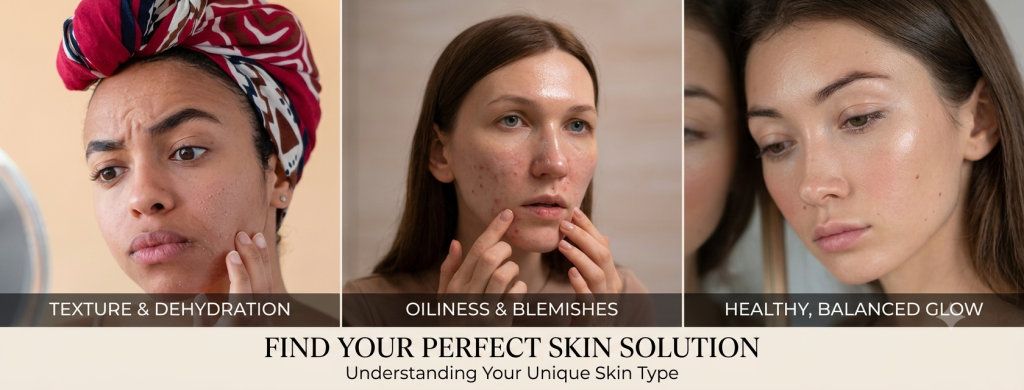
Have you ever bought an expensive skincare product after watching a social media reel, only to find that it made your skin worse? You’re not alone. Many people spend money on products that aren’t suitable for their skin simply because they don’t know their actual skin type.
How to know your skin type is one of the most important questions to answer before choosing a cleanser, moisturizer, serum, or sunscreen. Your skin type affects how your skin reacts to different ingredients, weather changes, and daily skincare habits. Using products that don’t match your skin’s needs can lead to acne, excessive oiliness, dryness, irritation, or even damage to your skin barrier.
At ACE Skin and Hair Clinic, Dr. Tanveer Fatima, an experienced dermatologist in Roorkee, often meets patients who have tried multiple skincare products without success. In many cases, the problem isn’t the product itself—it’s that the product isn’t designed for their skin type. Once the correct skin type is identified and the routine is adjusted, many people notice healthier, more balanced skin.
In this guide, you’ll learn:
- What skin type actually means
- The difference between oily, dry, and combination skin
- Simple ways to identify your skin type at home
- The best skincare products for each skin type
- How weather can affect your skin
- Common skincare mistakes to avoid
- When it’s time to consult a dermatologist
Whether you’re starting your skincare journey or looking to improve your current routine, this guide will help you make informed decisions for healthier skin.
Why Knowing Your Skin Type Is So Important
Your skin is unique, and what works for someone else may not work for you. Understanding your skin type helps you choose products that support your skin instead of causing new problems.
Knowing your skin type can help you:
- Select the right cleanser and moisturizer.
- Reduce acne breakouts and clogged pores.
- Prevent dryness, irritation, and redness.
- Protect your skin barrier.
- Avoid wasting money on unsuitable skincare products.
- Build a simple and effective skincare routine.
Many people assume they have oily skin because their face looks shiny by midday. Others think they have dry skin because they feel tightness after washing their face. However, these signs can sometimes be temporary and influenced by weather, hormones, or the wrong skincare routine. That’s why understanding your skin’s natural behavior is essential.
What Determines Your Skin Type?
Your skin type is mainly influenced by the amount of natural oil (sebum) your skin produces. Sebum is important because it keeps your skin soft, hydrated, and protected. However, too much or too little oil can lead to different skin concerns.
Several factors can influence your skin type, including:
Genetics
Your genes largely determine whether your skin tends to be oily, dry, or balanced.
Hormones
Hormonal changes during puberty, pregnancy, menopause, or conditions like PCOS can increase oil production and contribute to acne.
Age
As you grow older, your skin naturally produces less oil, making dryness more common.
Climate
Hot and humid weather may make your skin appear oilier, while cold and dry weather can reduce moisture and cause flaking.
Lifestyle
Stress, lack of sleep, diet, and using harsh skincare products can all affect how your skin behaves.
Although these factors can influence your skin, your basic skin type usually remains the same. What often changes is your skin’s condition, which can vary depending on your environment and daily habits.
Oily vs Dry vs Combination Skin: What's the Difference?
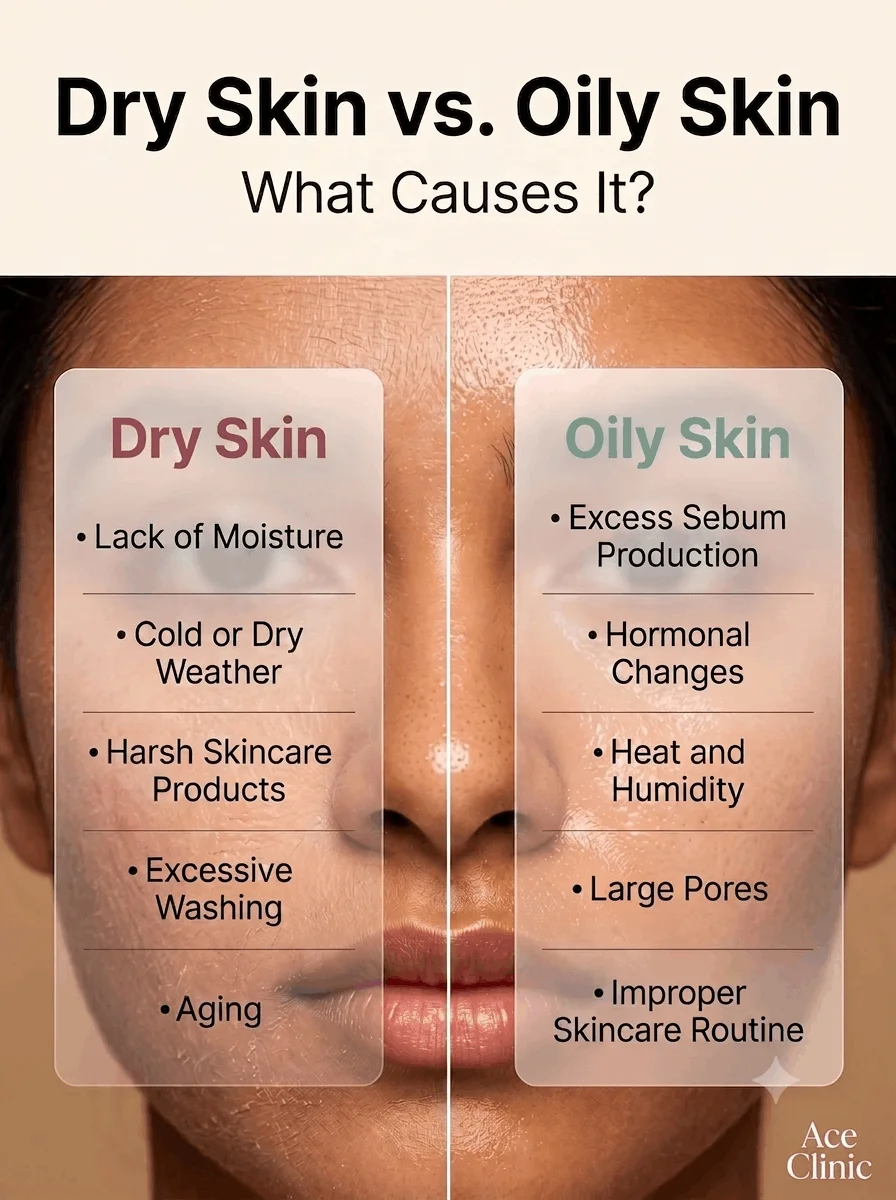
Understanding the characteristics of each skin type makes it easier to choose products that suit your skin’s needs.
| Feature | Oily Skin | Dry Skin | Combination Skin |
|---|---|---|---|
| Oil Production | High | Low | Oily T-zone, normal or dry cheeks |
| Appearance | Shiny | Dull or flaky | Mixed appearance |
| Pores | Enlarged | Small | Larger on forehead, nose, and chin |
| Acne | Common | Less common | Usually in the T-zone |
| Skin Feel | Greasy | Tight and rough | Oily and dry in different areas |
| Best Moisturizer | Lightweight gel | Rich cream | Lightweight lotion |
This comparison provides a quick overview, but understanding each skin type in detail will help you identify your own more accurately.
What Is Oily Skin?
Oily skin occurs when the sebaceous glands produce excess sebum. While sebum is necessary for healthy skin, too much of it can make the face look shiny and increase the chances of clogged pores and acne.
Common Signs of Oily Skin
You may have oily skin if you notice:
- A shiny face within a few hours of washing.
- Enlarged pores, especially around the nose.
- Frequent pimples or acne breakouts.
- Blackheads and whiteheads.
- Makeup sliding off quickly.
- A greasy feeling by the end of the day.
People with oily skin often think they should wash their face repeatedly. However, overwashing can strip away natural oils, causing the skin to produce even more oil to compensate.
Common Causes of Oily Skin
Several factors can increase oil production, including:
- Genetics
- Hormonal changes
- Hot and humid weather
- Stress
- Heavy or pore-clogging skincare products
- Over-cleansing the face
Choosing products labeled oil-free, non-comedogenic, or gel-based can help manage excess oil without over-drying the skin.
What Is Dry Skin?
Dry skin develops when your skin lacks enough natural oil to maintain its protective barrier. As a result, moisture escapes more easily, leaving the skin feeling rough, tight, or flaky.
It’s important to understand that dry skin and dehydrated skin are not the same.
- Dry skin is a skin type with naturally low oil production.
- Dehydrated skin is a temporary condition caused by a lack of water, which can affect any skin type—even oily skin.
Understanding this difference helps you choose the right skincare products instead of treating the wrong problem.
Signs of Dry Skin
You may have dry skin if you experience:
- Tightness after washing your face.
- Rough or uneven texture.
- Flaky or peeling skin.
- Itching.
- Fine lines becoming more noticeable.
- Redness during winter.
People with dry skin should focus on maintaining their skin barrier by using gentle cleansers and moisturizers containing ingredients such as ceramides, glycerin, and hyaluronic acid.
What Is Combination Skin?
Combination skin is one of the most common skin types. It means that different parts of your face have different needs.
Typically:
- The forehead, nose, and chin (T-zone) become oily.
- The cheeks remain normal or dry.
- Acne usually appears in oily areas.
- Dryness is more noticeable around the cheeks or jawline.
Because different areas behave differently, combination skin often requires a balanced skincare routine rather than treating the entire face the same way.
In the next section, we’ll explain a simple at-home skin type test that can help you identify your skin type in less than an hour. We’ll also cover the best skincare routine for each skin type, how weather affects your skin, common skincare mistakes, a real-life clinic experience, and answers to frequently asked questions.
Simple Skin Type Test at Home (Takes Just 30 Minutes)
Many people guess their skin type based on how their face looks during the day. However, using makeup, sunscreen, or skincare products can make it difficult to understand your skin’s natural behavior. This simple test helps you identify your skin type without any special equipment.
Step 1: Wash Your Face
Use a mild, fragrance-free cleanser to remove dirt, oil, and makeup. Avoid using exfoliating scrubs or face washes containing strong active ingredients.
Tip: Don’t apply toner, moisturizer, serum, or sunscreen after washing your face.
Step 2: Wait for 30–45 Minutes
Leave your skin completely bare.
Avoid:
- Touching your face
- Going outside in direct sunlight
- Exercising
- Sitting in front of a fan or air conditioner
This allows your skin to return to its natural state.
Step 3: Observe Your Skin
Stand in front of a mirror and look closely.
If your entire face looks shiny…
You most likely have oily skin.
You may also notice:
- Enlarged pores
- Blackheads
- Pimples
- Greasy feeling around the nose and forehead
If your face feels tight or flaky…
You probably have dry skin.
You may notice:
- Rough texture
- Fine flakes
- Itching
- Redness
- Skin that feels stretched after washing
If only your forehead, nose, and chin are oily…
You likely have combination skin.
Your cheeks may feel:
- Normal
- Slightly dry
- Comfortable
This is one of the most common skin types.
The Blotting Paper Test
If you’re still unsure, gently press blotting paper on different parts of your face.
- Oil on the entire sheet = Oily skin
- Very little oil = Dry skin
- Oil only from the T-zone = Combination skin
This is a quick and practical way to confirm your skin type.
A Real Story from Our Clinic
At ACE Skin and Hair Clinic, a college student visited Dr. Tanveer Fatima with complaints of frequent acne and oily skin. She had stopped using moisturizer because she believed it would make her skin even oilier.
During the consultation, it became clear that she had combination skin, not oily skin. Her forehead and nose produced excess oil, but her cheeks were actually dehydrated. Because she wasn’t moisturizing, her skin responded by producing even more oil in the T-zone.
Instead of recommending multiple expensive products, Dr. Tanveer advised her to:
- Switch to a gentle gel cleanser.
- Use a lightweight, non-comedogenic moisturizer.
- Apply sunscreen every morning.
- Avoid washing her face more than twice a day.
Within a few weeks, her skin felt more balanced, and she noticed fewer breakouts.
The lesson? The right skincare routine starts with knowing your skin type—not by following trends.
Best Skincare Routine Based on Your Skin Type
For Oily Skin
People with oily skin often try to remove every trace of oil. Unfortunately, this can make the problem worse.
Morning Routine
✔ Gentle gel cleanser
✔ Niacinamide serum (optional)
✔ Oil-free moisturizer
✔ Sunscreen (SPF 30 or higher)
Night Routine
✔ Cleanser
✔ Salicylic acid (if recommended)
✔ Lightweight moisturizer
Ingredients That Work Well
- Niacinamide
- Salicylic Acid
- Zinc PCA
- Green Tea Extract
Avoid
- Heavy creams
- Coconut oil on the face
- Harsh alcohol-based toners
For Dry Skin
Dry skin needs hydration and protection.
Morning Routine
✔ Cream cleanser
✔ Hydrating moisturizer
✔ Sunscreen
Night Routine
✔ Gentle cleanser
✔ Rich moisturizer
✔ Barrier-repair cream if needed
Ingredients to Look For
- Ceramides
- Hyaluronic Acid
- Glycerin
- Squalane
Avoid
- Hot water
- Strong exfoliation
- Washing your face too often
For Combination Skin
Different areas of your face need different care.
Morning
✔ Gentle cleanser
✔ Lightweight moisturizer
✔ Sunscreen
Night
✔ Cleanser
✔ Niacinamide serum (optional)
✔ Moisturizer
If your cheeks become dry during winter, you may need a richer moisturizer only in those areas.
Does Weather Change Your Skin Type?
One of the most common questions dermatologists hear is:
“My skin changes every season. Does that mean my skin type changes?”
The answer is not usually.
Your skin type generally remains the same, but the way it behaves can change depending on the weather.
Summer
During hot weather:
- Oil production increases.
- Sweat mixes with oil.
- Acne and clogged pores become more common.
What to do
- Use gel-based moisturizers.
- Choose lightweight sunscreen.
- Wash your face twice daily.
Winter
Cold weather reduces moisture in the skin.
Common problems include:
- Dryness
- Flaking
- Tightness
- Itching
What to do
- Apply moisturizer immediately after washing your face.
- Avoid very hot showers.
- Use cream-based moisturizers if needed.
Monsoon
High humidity can make oily skin feel greasier and increase the risk of fungal infections.
Tips
- Cleanse gently.
- Keep your face dry.
- Avoid sharing towels.
Air Conditioning
Spending long hours in air-conditioned rooms can reduce skin hydration, making even oily skin feel tight.
Using a lightweight moisturizer can help maintain the skin barrier.
Common Skincare Mistakes That Can Damage Your Skin
Many skin concerns are caused not by the skin type itself, but by everyday habits.
Avoid these common mistakes:
❌ Washing your face four or five times a day.
❌ Skipping moisturizer because your skin feels oily.
❌ Sleeping with makeup on.
❌ Trying every trending skincare product.
❌ Using lemon or toothpaste on pimples.
❌ Mixing too many active ingredients without guidance.
❌ Ignoring sunscreen on cloudy days.
Keeping your routine simple and consistent is often more effective than using many products at once.
When Should You See a Dermatologist?
While identifying your skin type at home is helpful, some skin problems require professional evaluation.
Consider consulting a dermatologist in Roorkee if you experience:
- Acne that doesn’t improve.
- Persistent dryness despite moisturizing.
- Severe itching or redness.
- Frequent skin irritation.
- Dark spots after acne.
- Sudden changes in your skin.
- Difficulty choosing the right skincare products.
A dermatologist can examine your skin, identify the underlying cause, and recommend a treatment plan tailored to your needs.
Frequently Asked Questions
1. How can I know my skin type at home?
Wash your face with a gentle cleanser, wait for 30–45 minutes without applying any products, and observe how your skin feels and looks. A shiny face usually indicates oily skin, tightness suggests dry skin, and an oily T-zone with normal or dry cheeks points to combination skin.
2. Can my skin type change over time?
Your basic skin type is largely determined by genetics, but hormones, aging, climate, and skincare habits can affect how your skin behaves.
3. Should oily skin use moisturizer?
Yes. Skipping moisturizer can cause your skin to produce even more oil. Choose a lightweight, oil-free, non-comedogenic moisturizer
4. Which skin type gets acne more often?
Acne is more common in oily skin because excess sebum and clogged pores create an environment where breakouts can occur. However, people with combination skin may also experience acne, especially in the T-zone.
5. Why is my face oily but my cheeks are dry?
This is a classic sign of combination skin, where different areas of the face have different oil levels and require a balanced skincare routine.
6. Does weather affect my skin?
Yes. Heat and humidity can increase oiliness, while cold, dry weather may lead to dehydration and flaking. Adjusting your routine with the seasons can help keep your skin comfortable.
7. How often should I wash my face?
For most people, washing the face twice a day—once in the morning and once before bed—is enough. Over-cleansing can weaken the skin barrier.
8. Which dermatologist in Roorkee can help identify my skin type?
If you're unsure about your skin type or have ongoing concerns such as acne, dryness, pigmentation, or sensitive skin, consulting an experienced dermatologist in Roorkee, such as Dr. Tanveer Fatima at ACE Skin and Hair Clinic, can help you receive a personalized skincare plan based on your skin's condition and lifestyle.
Conclusion
Knowing your skin type is the foundation of healthy skincare. Whether you have oily, dry, or combination skin, choosing products that match your skin’s needs can help prevent common concerns like acne, irritation, excessive dryness, and clogged pores. A simple at-home skin type test can give you a good starting point, while paying attention to seasonal changes and maintaining a consistent routine will help keep your skin balanced throughout the year.
If you’re still unsure about your skin type or your skin concerns continue despite using the right products, it’s a good idea to seek professional advice. At ACE Skin and Hair Clinic, Dr. Tanveer Fatima, an experienced dermatologist in Roorkee, provides personalized skin assessments and treatment plans to help you achieve healthier skin based on your unique needs—not social media trends.
ACE Clinic
Address: ACE Skin and Hair Clinic, Dehradun Rd, near Vinay Vishal hospital, Nehru Nagar, Roorkee, Uttarakhand 247667
Phone No: +91-9548732883
Email: [email protected]
Timings: 09:00 AM TO 10:00 PM
Google Map Location Listing: https://maps.app.goo.gl/xC7d3epyAZRNRtRw5