

A few loose hairs during washing or brushing are usually not a reason to panic. However, you should consider consulting a dermatologist or hair specialist if you notice:
- Sudden or excessive hair shedding that continues for several days or becomes noticeably worse over time.
- Hair becoming noticeably thinner, especially around the crown, hairline, or parting.
- A widening hair part that makes more of the scalp visible than before.
- Receding hairline that gradually moves backward or changes the shape of your forehead.
- Bald or patchy areas appearing suddenly or becoming larger over time.
- Hair loss that continues for several weeks without improving or slowing down.
- Persistent dandruff, itching, redness, or scaling that affects your scalp comfort.
- Scalp pain or inflammation, particularly when accompanied by tenderness, swelling, or irritation.
- Increased hair fall after an illness, major stress, or significant lifestyle change.
- Hair loss that does not improve despite changing hair-care products or routines.
- Hair loss that does not improve despite changing hair-care products
The earlier the cause is identified, the easier it can be to plan appropriate care.
What Does a Hair Specialist Treat?
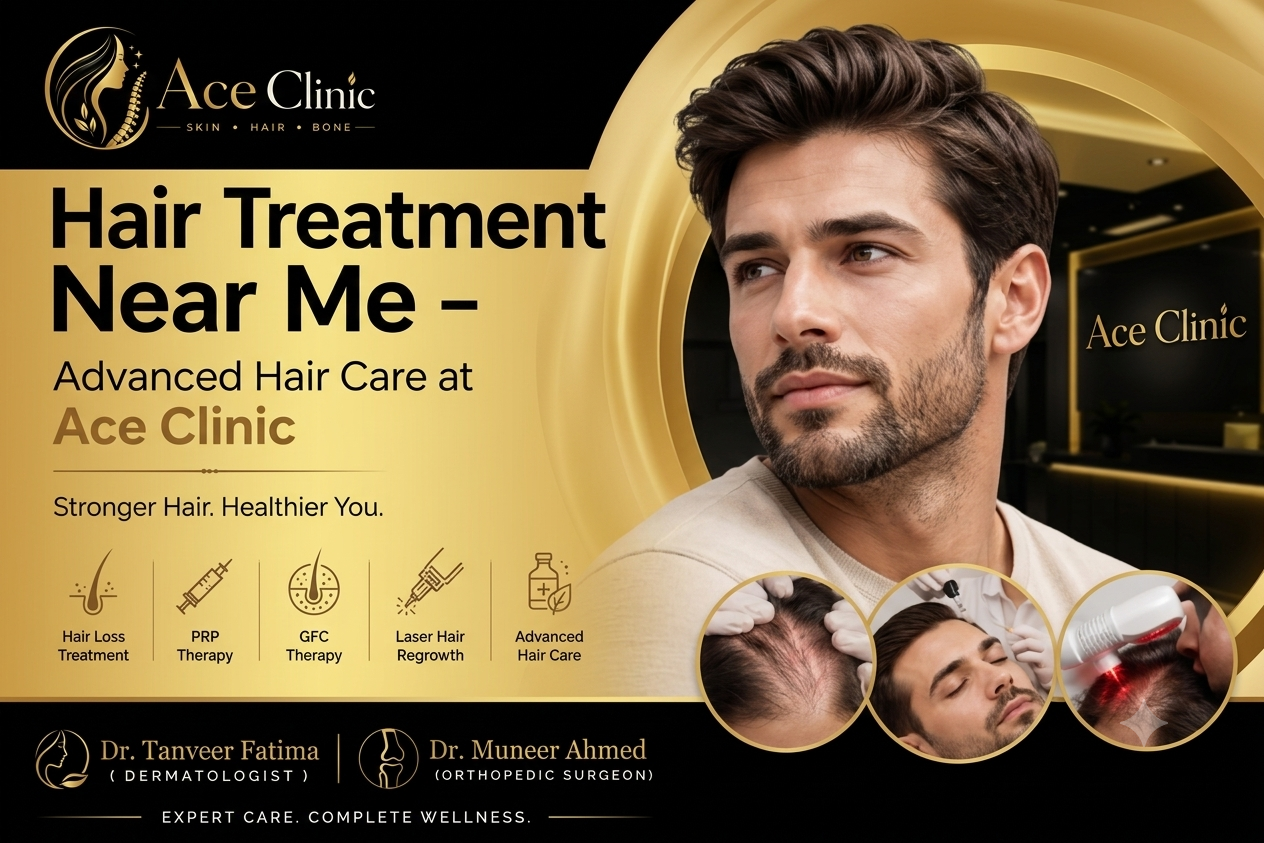
A hair specialist evaluates conditions affecting the hair, scalp, and hair follicles. A dermatologist can assess whether your hair loss is related to a scalp condition, hereditary pattern, stress, nutritional factors, hormonal changes, inflammation, or another medical cause.
Common concerns include:
- Excessive hair fall
- Hair thinning
- Male pattern hair loss
- Female pattern hair loss
- Patchy hair loss
- Alopecia
- Dandruff and scalp conditions
- Itchy or inflamed scalp
- Hair breakage
- Hair loss after illness or stress
- Premature thinning
- Hair restoration concerns
The goal is not simply to reduce the amount of hair you see on your comb. The important step is understanding why the hair loss is happening.
Why Am I Losing Hair?
Hair loss can happen for many reasons. Two people may have similar-looking hair fall but completely different underlying causes.
| Possible cause | What you may notice |
|---|
| Pattern hair loss | Gradual thinning, receding hairline, or widening part |
| Telogen effluvium | Increased shedding after stress, illness, fever, or major body changes |
| Alopecia areata | Sudden smooth, patchy areas of hair loss |
| Scalp conditions | Dandruff, itching, redness, scaling, or inflammation |
| Nutritional factors | Hair shedding associated with inadequate nutrition or certain deficiencies |
| Hormonal factors | Hair changes associated with hormonal or other medical conditions |
| Hair damage | Breakage related to excessive heat, chemical treatments, or styling |
This is why self-treating every type of hair fall in the same way may not give the expected results.
Hair Fall or Hair Breakage: What’s the Difference?
Hair shedding and hair breakage are not the same thing.
Hair shedding happens when a hair naturally leaves the scalp. Increased shedding may occur because of temporary or ongoing changes affecting the hair-growth cycle.
Hair breakage happens when the hair shaft snaps somewhere along its length. Frequent heat styling, chemical treatments, tight hairstyles, or damaged hair can contribute to breakage.
They can look similar when you notice hair on your pillow, clothes, brush, or bathroom floor. During a consultation, a dermatologist can examine the hair and scalp to help determine what is actually happening.
When Is Hair Loss a Warning Sign?
Hair loss deserves more attention when it is:
- Sudden rather than gradual
- Occurring in clearly defined patches
- Associated with scalp redness, scaling, pain, or itching
- Progressively getting worse
- Accompanied by significant hair thinning
- Associated with other changes in your health
- Continuing despite changes in your hair-care routine
Not every case of hair fall means there is a serious medical problem. However, persistent or unusual hair loss should not automatically be blamed on shampoo, weather, stress, or hard water without proper evaluation.
What Happens During a Hair Consultation?
A hair consultation is not simply about recommending a hair serum or shampoo.
At ACE Skin and Hair Clinic, the assessment may involve understanding your medical and hair history, examining the scalp and hair, and deciding whether further evaluation is appropriate.
1. Understanding Your Hair Loss
The dermatologist may ask when the hair loss started, whether it was sudden or gradual, and whether you have noticed thinning, patches, or increased shedding.
2. Looking at Your Scalp and Hair
The scalp and hair are examined for signs of inflammation, dandruff, infection, pattern thinning, breakage, or other changes.
3. Looking for Possible Triggers
Recent illness, stress, dietary changes, hormonal factors, family history, medications, and other circumstances may be relevant depending on the individual.
4. Tests When Medically Appropriate
Some people may need further investigations depending on their symptoms and clinical findings. Testing should be based on the individual situation rather than ordering every possible test for everyone.
5. Creating a Treatment Plan
Once the likely cause is understood, the treatment approach can be planned according to the individual’s condition, hair-loss pattern, scalp health, and treatment needs.
How Is Hair Loss Diagnosed?
There is no single test that explains every type of hair loss.
A dermatologist may consider:
- Your pattern of hair loss
- Duration and progression
- Scalp examination
- Family history
- Recent illness or stress
- Diet and lifestyle factors
- Hormonal or medical history where relevant
- Previous treatments
- Laboratory investigations when clinically indicated
The important point is that diagnosis comes before choosing a treatment.
This is particularly important when hair loss is sudden, patchy, severe, or persistent.
Hair Loss Treatment Options
Hair-loss treatment depends on the underlying cause. There is no single treatment that works for every person experiencing hair fall.
Depending on the diagnosis, treatment may involve medical management, treatment of an underlying scalp condition, correction of relevant contributing factors, or hair-restoration procedures.
At ACE Skin & Hair Clinic, treatment options may include appropriate care for:
- Excessive hair shedding
- Pattern hair loss
- Scalp and hair conditions
- Dandruff-related scalp concerns
- Hair thinning
- Selected cases requiring PRP or other hair-restoration approaches
- Hair transplant evaluation for suitable candidates
If you are considering hair loss treatment in Roorkee, the right approach is to first understand the type and cause of your hair loss.
Is PRP Suitable for Everyone With Hair Loss?
No.
PRP, or platelet-rich plasma therapy, may be considered for selected types of hair loss, but it is not automatically suitable for everyone.
Whether PRP is appropriate depends on factors such as the type of hair loss, stage of the condition, scalp health, and individual clinical assessment.
A dermatologist can help determine whether PRP is a reasonable option or whether another treatment approach would be more appropriate.
When Might Hair Transplant Be Considered?
A hair transplant is a hair-restoration procedure, not a universal solution for every type of hair loss.
A suitable candidate generally needs an appropriate pattern and sufficient donor hair. The cause and stability of hair loss are also important considerations.
Some people may benefit from medical treatment first, while others may eventually be evaluated for a hair transplant.
This is why a proper hair and scalp assessment is important before deciding on a procedure.
Hair Loss Case Study: Why Finding the Cause Matters
An Example From Clinical Practice
A patient may visit a hair clinic after noticing a sudden increase in hair shedding and assume that the problem is simply due to a shampoo, weather change, or routine hair damage.
However, a dermatologist does not look only at the amount of hair being lost. The consultation also considers when the shedding started, what happened before it started, the pattern of loss, scalp condition, medical history, diet, stress, and other relevant factors.
For example, imagine a young adult who develops increased hair shedding a few weeks after recovering from a significant illness. The important question would not simply be, “Which hair serum should I use?” The dermatologist would first consider whether the timing and pattern are consistent with a temporary shedding condition and whether another cause needs to be investigated.
The lesson: Similar-looking hair fall can have different causes. Identifying the cause helps a dermatologist decide whether the patient needs observation, medical treatment, investigation, scalp care, or another approach.
Note: Patient information should always remain confidential. Any real ACE Clinic case study published on this page should be anonymized and used only with appropriate patient consent.
Dr. Tanveer Fatima – Hair Specialist in Roorkee
Dr. Tanveer Fatima is a dermatologist associated with ACE Skin & Hair Clinic in Roorkee. Her dermatology practice includes evaluation and management of skin, hair, and scalp concerns.
For patients dealing with persistent hair fall, thinning, or scalp problems, a consultation can help determine whether the concern is related to a temporary shedding phase, a scalp condition, pattern hair loss, or another underlying factor.
Rather than choosing a hair treatment based only on advertisements or social-media trends, it is better to understand the reason behind the problem first.
Why Choose ACE Skin and Hair Clinic for Hair Concerns?
Choosing a hair specialist should be about more than finding a clinic that offers many procedures.
A useful consultation should focus on:
- Understanding your main hair concern
- Examining the scalp and hair
- Identifying possible causes
- Explaining available treatment options
- Setting realistic expectations
- Choosing treatment according to your individual condition
At ACE Skin & Hair Clinic, Roorkee, Dr. Tanveer Fatima provides dermatology care for patients seeking professional help for hair and scalp concerns.
Hair & Scalp Treatments at ACE Clinic
Depending on your diagnosis and individual needs, hair and scalp care may involve different approaches.
You can learn more about related services such as:
- Hair Loss Treatment in Roorkee – for patients seeking evaluation and management of excessive hair fall and thinning.
- PRP Hair Treatment – a treatment option that may be considered for selected types of hair loss.
- Hair Transplant – a hair-restoration procedure that may be considered for suitable candidates.
- Scalp and Dandruff Care – for patients experiencing persistent dandruff, itching, scaling, or other scalp concerns.
Treatment should always be selected according to the individual’s condition rather than simply choosing the most popular procedure.